Philosopher
Thomas Hobbes
1588–1679
English philosopher who argued in Leviathan that people escape a state of war only by submitting to an absolute sovereign, and defended a materialist view of the world.
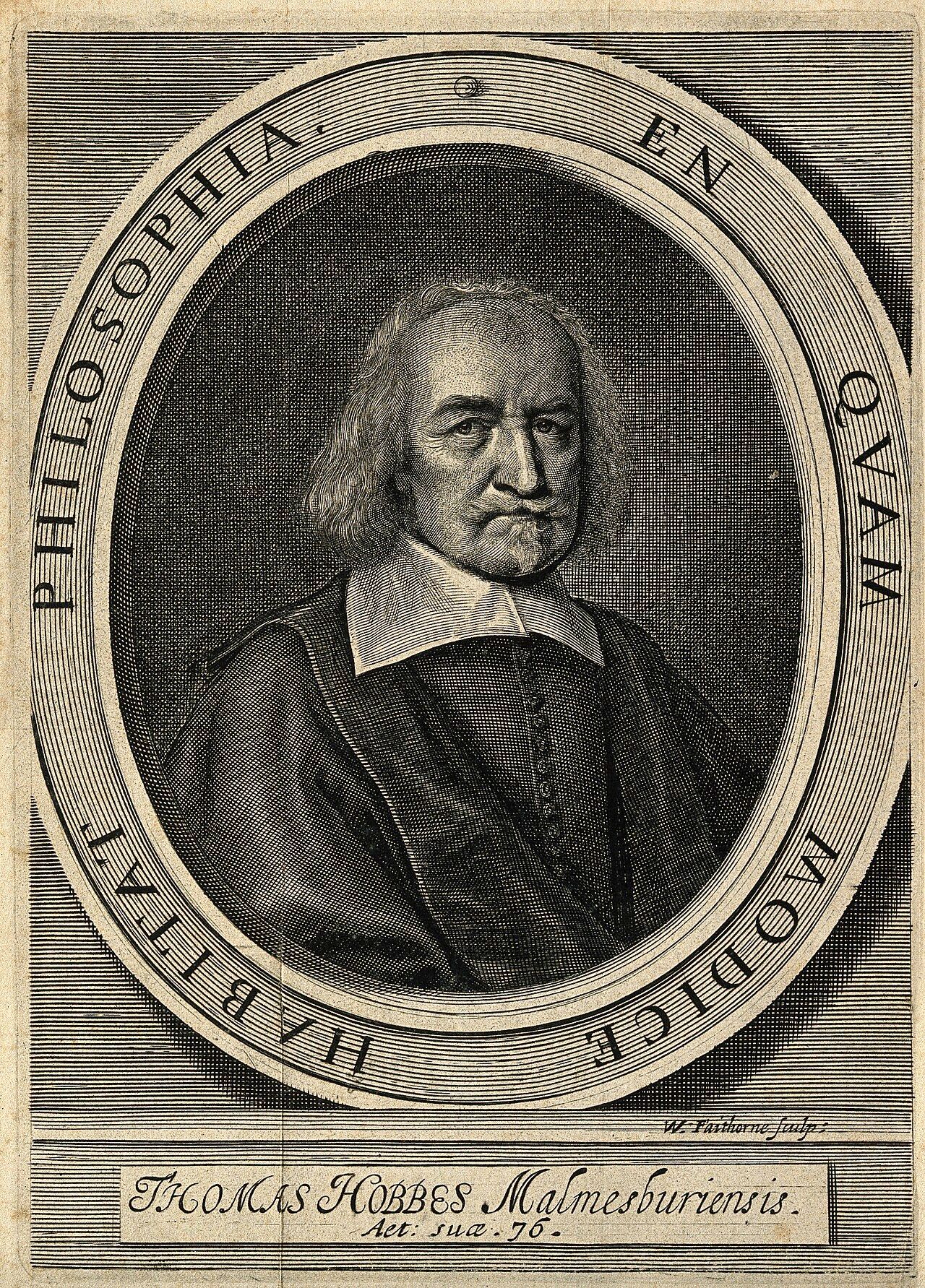

No arts; no letters; no society; and, which is worst of all, continual fear and danger of violent death; and the life of man, solitary, poor, nasty, brutish, and short.
Thomas Hobbes lived through the English Civil War, and his political philosophy is a response to that experience. His Leviathan (1651) argues that without government people would live in a war “of every man against every man”, in which life would be “solitary, poor, nasty, brutish, and short”. To escape it, they agree to hand their natural freedom to a sovereign whose power is absolute.
His interests reached far beyond politics. He defended materialist, nominalist and empiricist views against Descartes and the Aristotelians, clashed with Robert Boyle over experimental science, and translated Thucydides’ history of the Peloponnesian War into English.
Key ideas
- The state of nature
- Without a government to settle disputes, each person judges for themselves, and life is a “condition of war”. The life of man would be “solitary, poore, nasty, brutish, and short”.
- The laws of nature
- Reason shows everyone that peace is good, so we should seek peace and do what secures it when it is safe to do so. These “Lawes of Nature” come down to not treating others as we wouldn’t have them treat us.
- The absolute sovereign
- The only escape from the state of nature is to submit to a mutually recognised public authority. To avoid collapsing back into war, people should treat their sovereign as having absolute authority.
- Reasoning as computation
- Hobbes described reasoning as computation, and sketched the computations he thought go on when we reason. The idea has been linked to Leibniz and to modern computational theories of mind.
- Materialism
- Human beings, minds included, are entirely material. Later Hobbes came to think that even God is a kind of material, extended being. Few of his contemporaries shared this view.
- Tradition
- Western
- Region
- England
- Schools
- Social contract theory
- Period
- Early modern
- Themes
- How to govern
Influences
Influenced by
Thomas Hobbes1588–1679
Influenced
Influenced by
Thomas Hobbes1588–1679
Influenced
Key works
- On the Citizen (De Cive), 1642
- Leviathan, 1651
Sources
- Stewart Duncan, Thomas Hobbes, Stanford Encyclopedia of Philosophy
- Sharon A. Lloyd and Susanne Sreedhar, Hobbes’s Moral and Political Philosophy, Stanford Encyclopedia of Philosophy