Philosopher
René Descartes
1596–1650
Also known as Renatus Cartesius
Often called the father of modern philosophy, he sought certain foundations for knowledge through methodical doubt and the insight 'I think, therefore I am'.
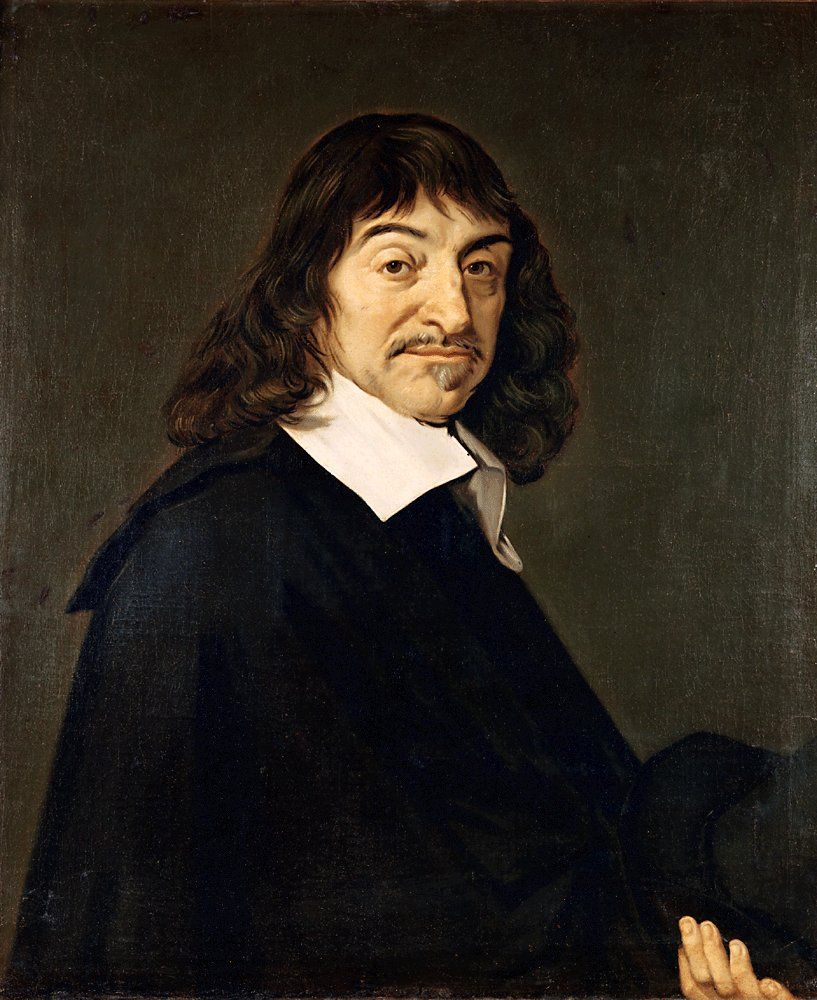

Descartes resolved to doubt everything that could possibly be doubted, and found one thing he could not: that he himself, while doubting, was thinking and so existed. From this starting point he attempted to rebuild knowledge on secure foundations. He drew a sharp distinction between mind, a thinking thing, and matter, an extended thing — a dualism that set the terms of the mind–body problem.
He was also a major mathematician, and one of the inventors of analytic geometry.
- Tradition
- Western
- Region
- France and the Dutch Republic
- Schools
- Rationalism
- Period
- Early modern
- Influenced
- Baruch Spinoza
Key works
- Discourse on the Method (Discours de la méthode), 1637
- Meditations on First Philosophy (Meditationes de prima philosophia), 1641
Sources
- Gary Hatfield, René Descartes, Stanford Encyclopedia of Philosophy