Philosopher
Baruch Spinoza
1632–1677
Also known as Benedictus de Spinoza, Bento de Espinosa
Rationalist who identified God with Nature and set out his ethics in the form of geometrical proofs.
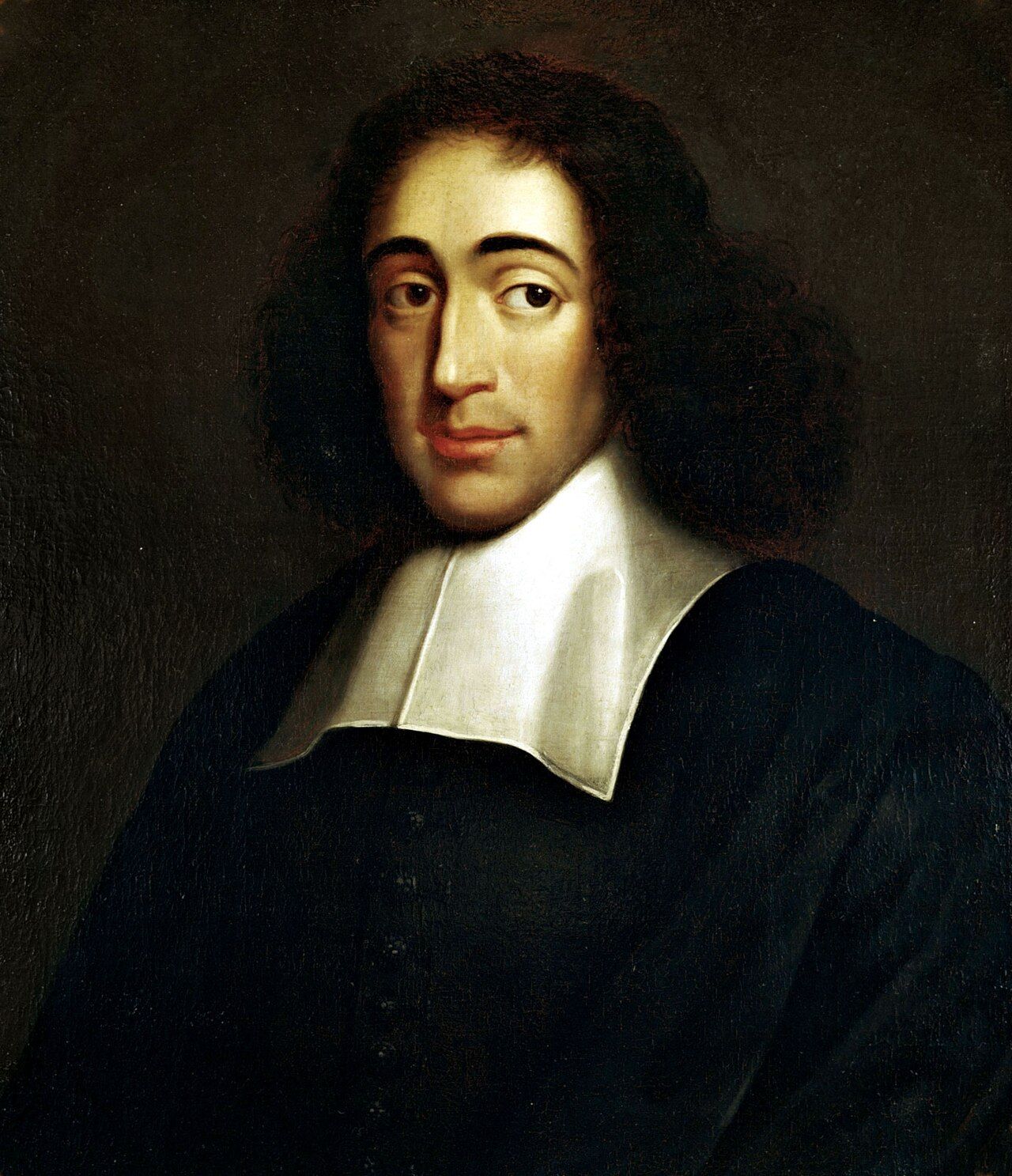

Born into Amsterdam’s Portuguese-Jewish community and expelled from it in 1656, Spinoza argued that there is only one substance, which can be called either God or Nature. Everything, including the human mind, is a part of it and follows from its nature by necessity. His Ethics presents this system in the manner of Euclid’s geometry, and argues that freedom and happiness come from understanding that necessity.
His defence of freedom of thought and his critical reading of scripture made him one of the most controversial thinkers of his age.
- Tradition
- Western
- Region
- Dutch Republic
- Schools
- Rationalism
- Period
- Early modern
- Influenced by
- René Descartes
Key works
- Theological-Political Treatise (Tractatus Theologico-Politicus), 1670
- Ethics (Ethica, ordine geometrico demonstrata), 1677
Sources
- Steven Nadler, Baruch Spinoza, Stanford Encyclopedia of Philosophy