Philosopher
John Locke
1632–1704
English empiricist who argued that all ideas come from experience, and whose case for natural rights and government by consent shaped liberal political thought.
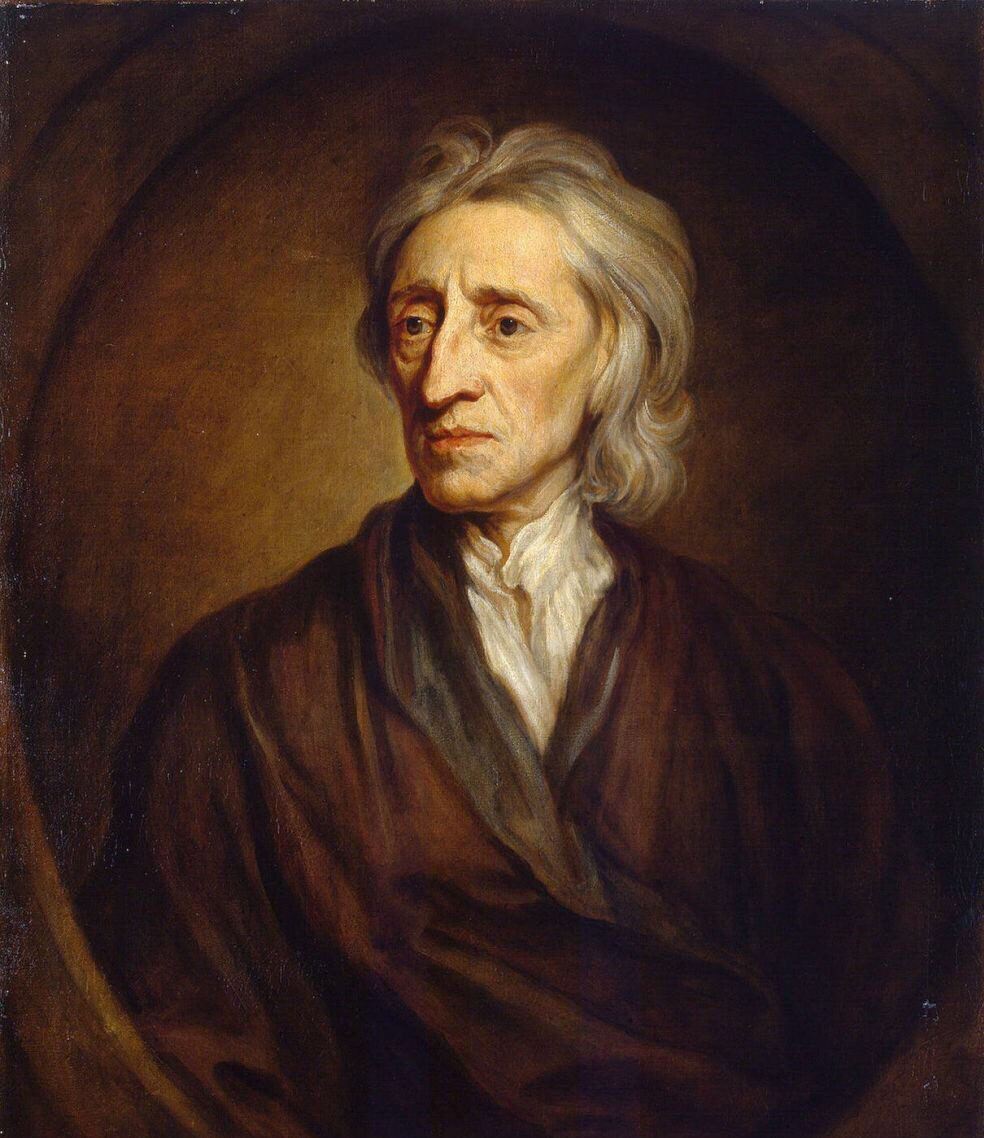

Let us then suppose the mind to be, as we say, white paper, void of all characters, without any ideas.
John Locke was an Oxford academic and medical researcher whose association with the future Earl of Shaftesbury drew him into politics. He spent years in exile in Holland before returning after the Revolution of 1688.
His Essay Concerning Human Understanding (1689) is one of the first great defences of modern empiricism. It denies that we are born with innate ideas, traces all our ideas to sensation and reflection, and asks how far our knowledge can legitimately reach. In the Two Treatises of Government he argued that people have natural rights to life, liberty and property, and that legitimate government rests on the consent of the governed; his Letter Concerning Toleration argued for religious toleration.
Key ideas
- No innate ideas
- Locke argued that there’s no good evidence for ideas or principles “stamped upon the Mind” at birth, whether of logic, morality or God.
- The blank slate
- At birth the mind is a blank slate (tabula rasa). All our ideas come from experience, either sensation or reflection on the workings of our own minds, and the mind builds complex ideas out of these simple ones.
- Property from labour
- God gave the earth to everyone in common. People make things their own by their labour, but only as much as they can use before it spoils; anything beyond that “belongs to others”.
- Government by consent
- Legitimate government comes from agreement, not force. It exists to preserve its subjects’ life, health, liberty and property; a government that systematically violates those rights puts itself in a state of war with its people, who may rightly resist.
- Religious toleration
- A government’s proper concern is its subjects’ civil interests, such as life, liberty and property. Salvation lies outside its domain, so it has no business enforcing religion.
- Tradition
- Western
- Region
- England
- Period
- Early modern
- Themes
- How to govern
Influences
Influenced by
John Locke1632–1704
Influenced
Influenced by
John Locke1632–1704
Influenced
Key works
- An Essay Concerning Human Understanding, 1689
- Read free at Project Gutenberg (volume 1 of 2)
- Two Treatises of Government, 1689
- A Letter Concerning Toleration, 1689
- Read free at Wikisource (translated by William Popple)
Sources
- William Uzgalis, John Locke, Stanford Encyclopedia of Philosophy