Philosopher
David Hume
1711–1776
Scottish empiricist and sceptic who argued that our beliefs about cause and effect rest on habit rather than reason.
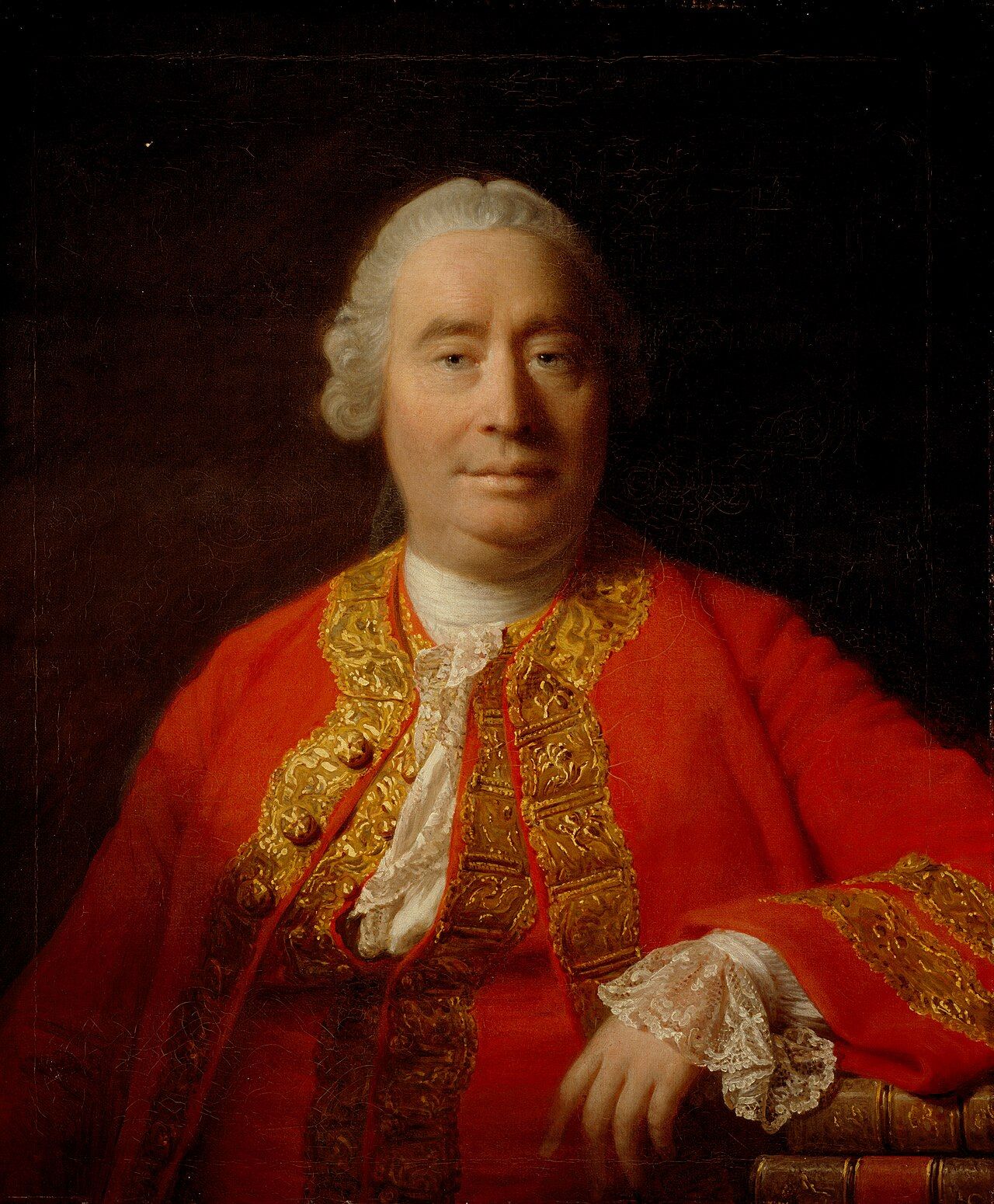

Hume set out to build a “science of man” on the basis of experience. He argued that we never observe any necessary connection between a cause and its effect, only one kind of event regularly following another, so our expectation that the future will resemble the past is a matter of custom. He applied the same scrutiny to the self, to morality — which he grounded in sentiment rather than reason — and to arguments for the existence of God.
His Dialogues Concerning Natural Religion was published after his death.
- Tradition
- Western
- Region
- Scotland
- Schools
- Empiricism
- Period
- Early modern
- Influenced
- Immanuel Kant
Key works
- A Treatise of Human Nature, 1739
- An Enquiry Concerning Human Understanding, 1748
- Dialogues Concerning Natural Religion, 1779
Sources
- Hsueh Qu and Elizabeth S. Radcliffe, David Hume, Stanford Encyclopedia of Philosophy