Philosopher
Immanuel Kant
1724–1804
Argued that the mind actively structures experience, reconciling rationalism and empiricism, and grounded morality in the rational will.
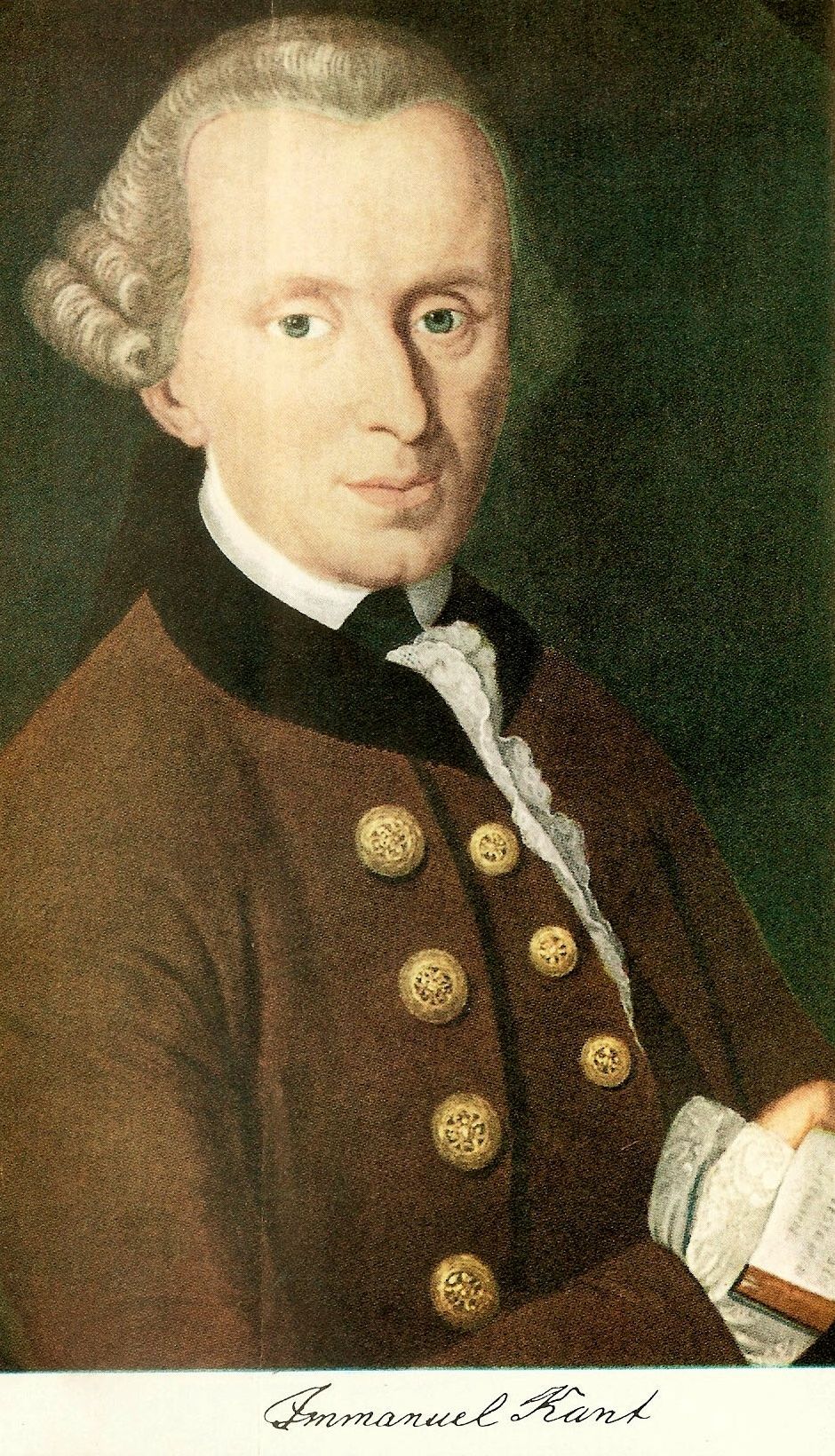

Kant said that reading Hume woke him from his “dogmatic slumber”. In the Critique of Pure Reason he argued that space, time and categories such as causality are not learned from experience but are forms the mind itself brings to it — so we can have certain knowledge of the world as it appears to us, though not of things as they are in themselves.
In ethics he held that the moral law is one that reason gives itself: act only on principles that you could will to be universal laws.
- Tradition
- Western
- Region
- Königsberg, Prussia
- Period
- Early modern
- Influenced by
- David Hume
Key works
- Critique of Pure Reason (Kritik der reinen Vernunft), 1781
- Groundwork of the Metaphysics of Morals (Grundlegung zur Metaphysik der Sitten), 1785
- Critique of Practical Reason (Kritik der praktischen Vernunft), 1788
Sources
- Michael Rohlf, Immanuel Kant, Stanford Encyclopedia of Philosophy