Philosopher
George Berkeley
1685–1753
Also known as Bishop Berkeley
Irish philosopher and bishop who argued that there is no matter, only minds and their ideas, so that for ordinary things to be is to be perceived.
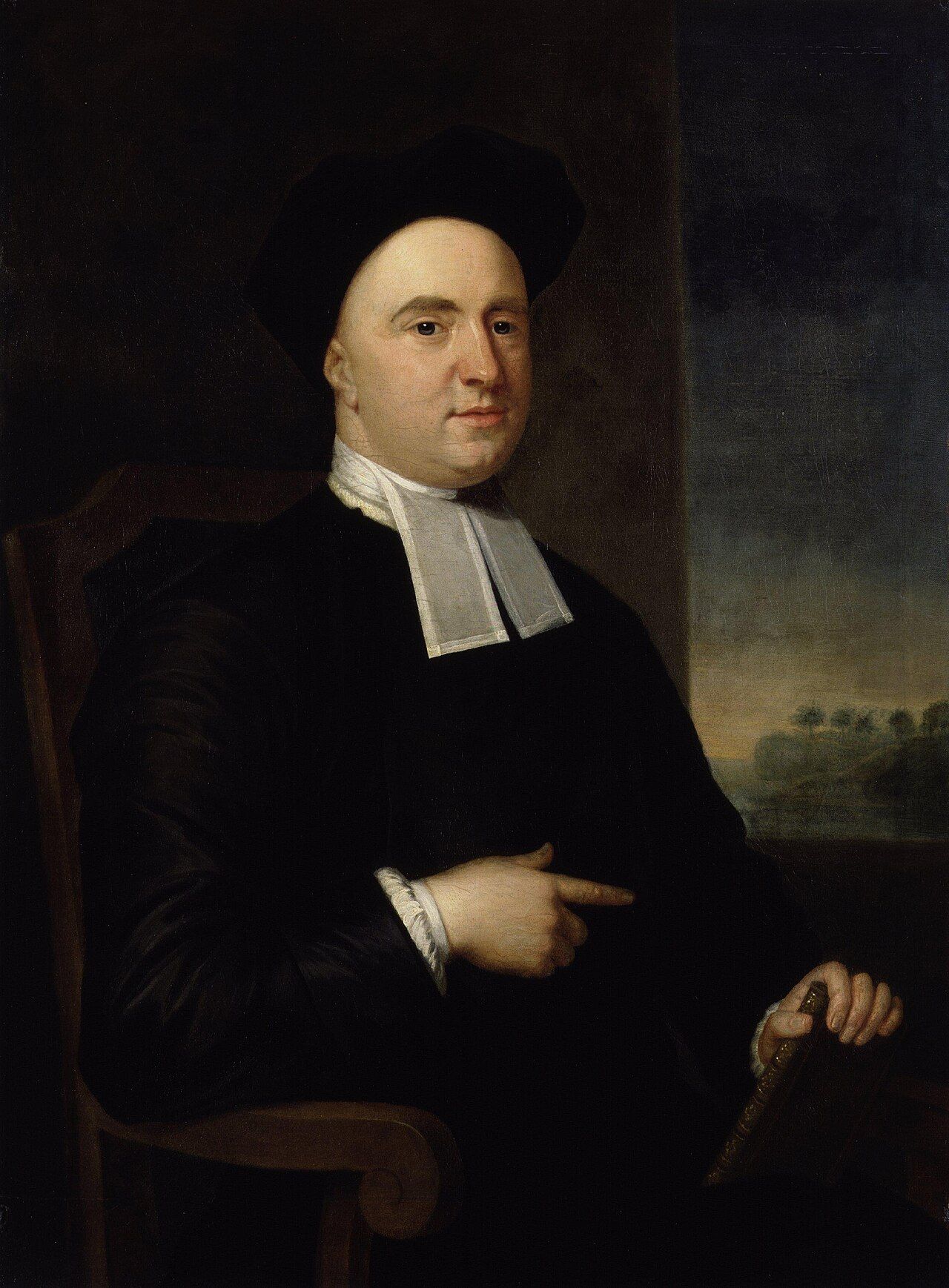

It is indeed an opinion strangely prevailing amongst men, that houses, mountains, rivers, and in a word all sensible objects, have an existence, natural or real, distinct from their being perceived by the understanding.
Berkeley was born near Kilkenny in Ireland in 1685, and at Trinity College, Dublin, he encountered the new science and philosophy. His notebooks show his immaterialism taking shape as he argued with Descartes, Locke, Malebranche, Newton and Hobbes. Before he was thirty he had published the books he is still read for, the Principles and the Three Dialogues.
He spent three years in Rhode Island waiting for funds to found a college in Bermuda, which never came. Later he criticised the foundations of Newton’s calculus in The Analyst, became Bishop of Cloyne in 1734, and in Siris promoted tar-water as a medicine. He died in 1753 in Oxford. Many of his first readers met him with incomprehension, but he influenced both Hume and Kant.
Key ideas
- To be is to be perceived
- Houses, mountains and rivers are things we perceive by sense, and we perceive only our own ideas, so ordinary objects are ideas. Their existence consists in being perceived; the idea of something existing unperceived is a contradiction.
- No material substance
- Berkeley attacked the belief that behind our ideas lies unthinking matter that they represent. Materialism, he charged, leads to scepticism, since our senses would mislead us about matter’s nature, and to atheism, since a material world could run without God.
- Idealism and common sense
- Reality consists only of minds and their ideas. Berkeley insisted this agrees with common sense better than materialism does: the things we see and touch are real, just as we perceive them.
- God and the order of nature
- The ideas of sense are not produced by us but by God, and they come in regular patterns. The laws of nature are simply the set rules by which God excites these ideas in our minds.
- Tradition
- Western
- Region
- Ireland
- Period
- Early modern
Influences
Influenced by
- René Descartes1596–1650criticised
- John Locke1632–1704criticised
- Nicolas Malebranche1638–1715criticised
George Berkeley1685–1753
Influenced
Influenced by
- René Descartes1596–1650criticised
- John Locke1632–1704criticised
- Nicolas Malebranche1638–1715criticised
George Berkeley1685–1753
Influenced
Where these links come from
- George Berkeley argued against René Descartes. Source: Lisa Downing and David Hilbert, George Berkeley, Stanford Encyclopedia of Philosophy
- George Berkeley argued against John Locke. Source: Lisa Downing and David Hilbert, George Berkeley, Stanford Encyclopedia of Philosophy
- George Berkeley argued against Nicolas Malebranche. Source: Lisa Downing and David Hilbert, George Berkeley, Stanford Encyclopedia of Philosophy
- David Hume drew on George Berkeley. Source: Lisa Downing and David Hilbert, George Berkeley, Stanford Encyclopedia of Philosophy
- Immanuel Kant drew on George Berkeley. Source: Lisa Downing and David Hilbert, George Berkeley, Stanford Encyclopedia of Philosophy
Key works
- An Essay Towards a New Theory of Vision, 1709
- A Treatise Concerning the Principles of Human Knowledge, 1710
- Three Dialogues between Hylas and Philonous, 1713
Sources
- Lisa Downing and David Hilbert, George Berkeley, Stanford Encyclopedia of Philosophy