Philosopher
Vasubandhu
fl. 350–450 CE
Buddhist philosopher whose Treasury of the Abhidharma became a standard handbook, and whose later works argue that the world we experience is “mere cognition”.
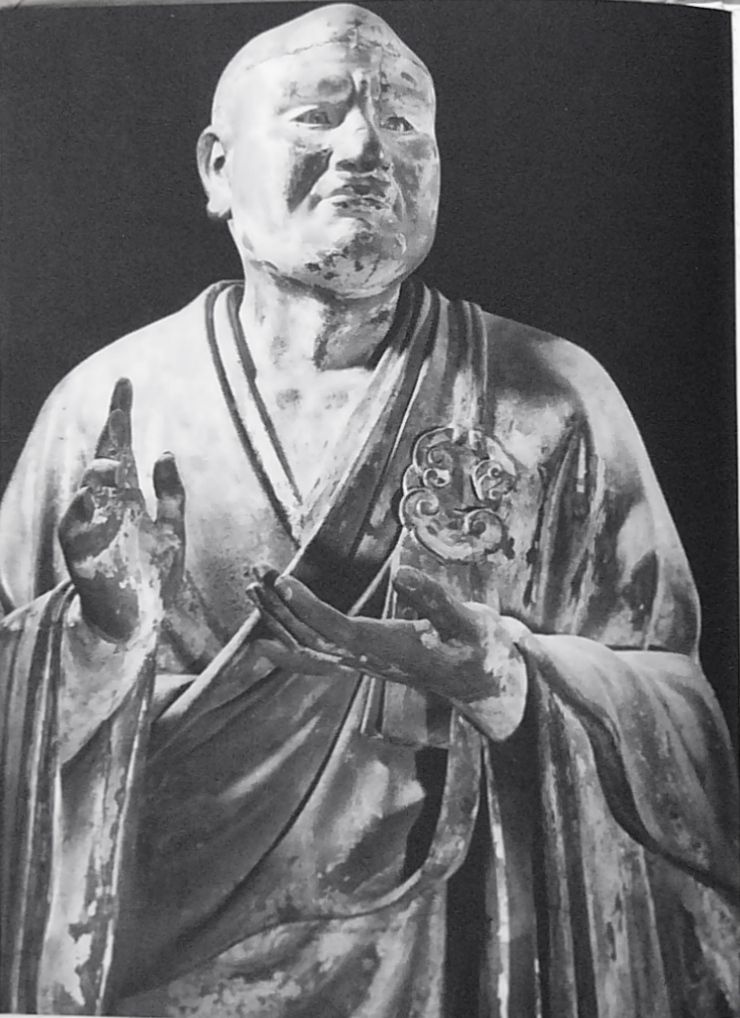

Vasubandhu lived in the fourth or fifth century CE, under the Gupta empire, and made his mark on three Buddhist scholastic traditions in turn. His Commentary on the Treasury of the Abhidharma, an analysis of experience into its momentary constituents, is still the main source for non-Mahāyāna Buddhist philosophy in Tibetan and East Asian Buddhism.
Traditionally said to have been won over to the Mahāyāna by his half-brother Asaṅga, he became a founder of Yogācāra. In his Twenty Verses and Thirty Verses he argued that the world we experience is “mere cognition”: appearances in consciousness rather than independently existing external objects.
Key ideas
- Appearance only (vijñaptimātra)
- “Everything in the three realms is only appearance.” There are no external things, only minds and mental states. Our experience of the world is like the hairs seen by someone with an eye disease: an experience of something that doesn’t exist as it appears.
- Against external objects
- A perceived object would have to be built from partless atoms or be a partless extended whole. Vasubandhu argued that neither is coherent, so external objects must be unreal appearances.
- Momentariness
- Nothing can change and remain itself, and everything is impermanent, so everything lasts only a moment. Vasubandhu added that things must destroy themselves, because destruction can’t be caused.
- No single creator
- Vasubandhu argued against Īśvara, a God who is the sovereign creator of all things. Living beings arise from many conditions, not from a single cause of the whole world.
Influences
Influenced by
Vasubandhufl. 350–450 CE
Influenced
Influenced by
Vasubandhufl. 350–450 CE
Influenced
Key works
- Commentary on the Treasury of the Abhidharma (Abhidharmakośabhāṣya)
- Twenty Verses (Viṃśikā)
- Thirty Verses (Triṃśikā)
Sources
- Jonathan C. Gold, Vasubandhu, Stanford Encyclopedia of Philosophy