Philosopher
The Buddha
fl. 465–435 BCE
Also known as Siddhārtha Gautama, Śākyamuni
Founder of Buddhism, who taught that suffering arises from craving and can be ended, and that there is no enduring self.
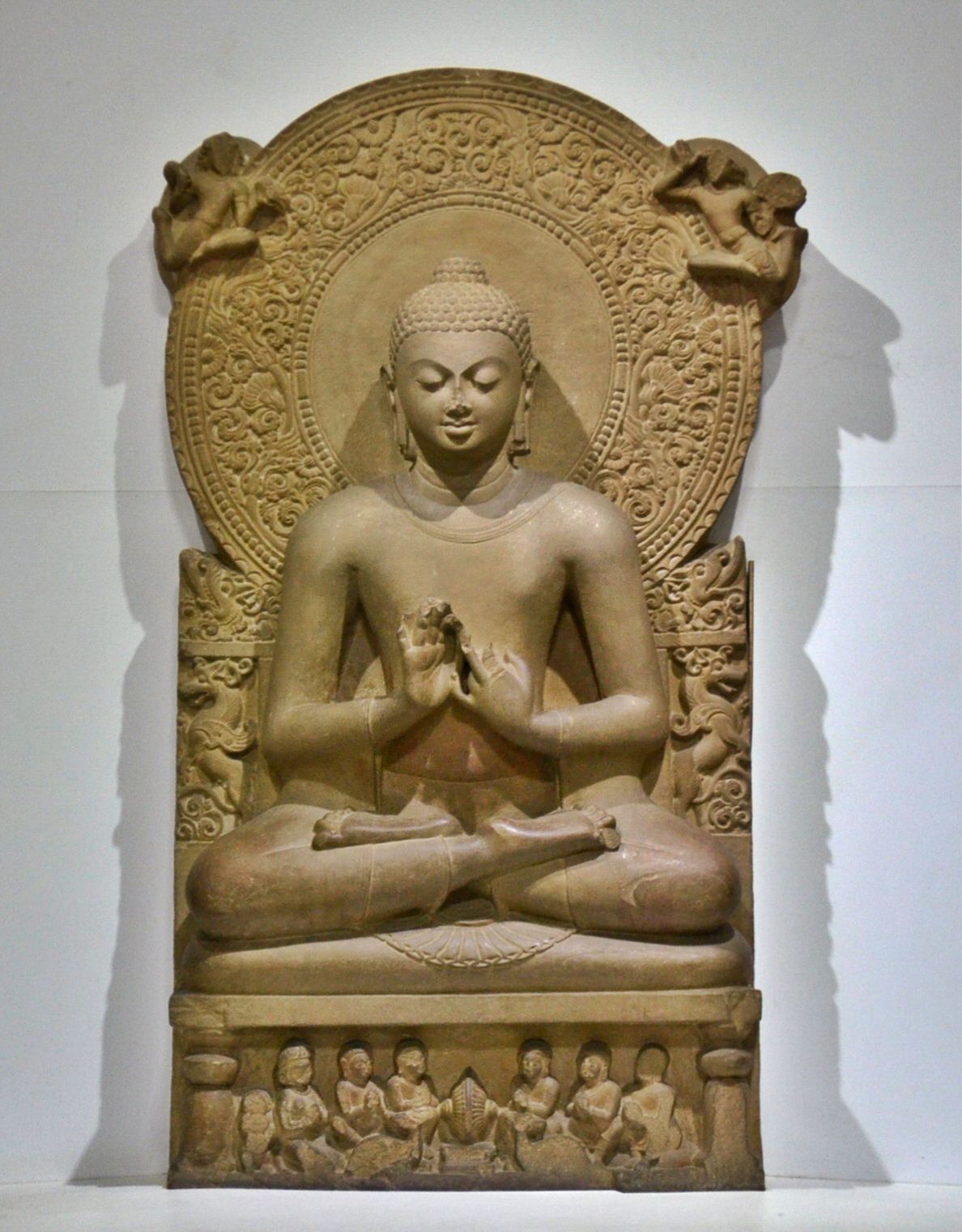
.jpg)
All that we are is the result of what we have thought: it is founded on our thoughts, it is made up of our thoughts.
The Buddha, “the awakened one”, was born Siddhārtha Gautama into the Śākya clan in the foothills of the Himalayas. After years as a wandering ascetic he attained awakening, and spent the rest of his life teaching in northern India. His teachings were passed on orally and later written down in the collections known as the Nikāyas or Āgamas.
At their heart are the Four Noble Truths: that life involves suffering, that suffering arises from craving, that it can cease, and that there is a path to its cessation. Central to his analysis is the claim that there is no enduring self, only a changing stream of physical and mental events. His dates are uncertain; many scholars place him around 450 BCE.
Key ideas
- The Four Noble Truths
- There is suffering; suffering has an origin; it can cease; and there is a path to its cessation. “Suffering” here means existential frustration and despair, which arise from our experience of impermanence.
- The origins of suffering
- Ignorance of three facts about existence (suffering, impermanence and non-self) leads us to treat parts of ourselves as “I” and “mine”. That breeds desire and aversion, which bind us to rebirth in a potentially unending cycle.
- Non-self (anātman)
- If there were a self it would be permanent, but none of the five kinds of physical and mental element that make up a person is permanent. So there is no self; the person is a useful fiction.
- Karma is intention
- “Action” (karma) means the intention behind a deed, not the movement it causes. Each action brings its own pleasant, painful or neutral result for the one who acts, which requires rebirth for as long as action continues.
- Tradition
- Indian
- Region
- Northern India