Philosopher
Suhrawardi
1154–1191
Also known as Shihab al-Din Yahya al-Suhrawardi, al-Maqtul
Founder of the Illuminationist school, who described reality as a hierarchy of lights and held that the deepest knowledge comes through direct presence.
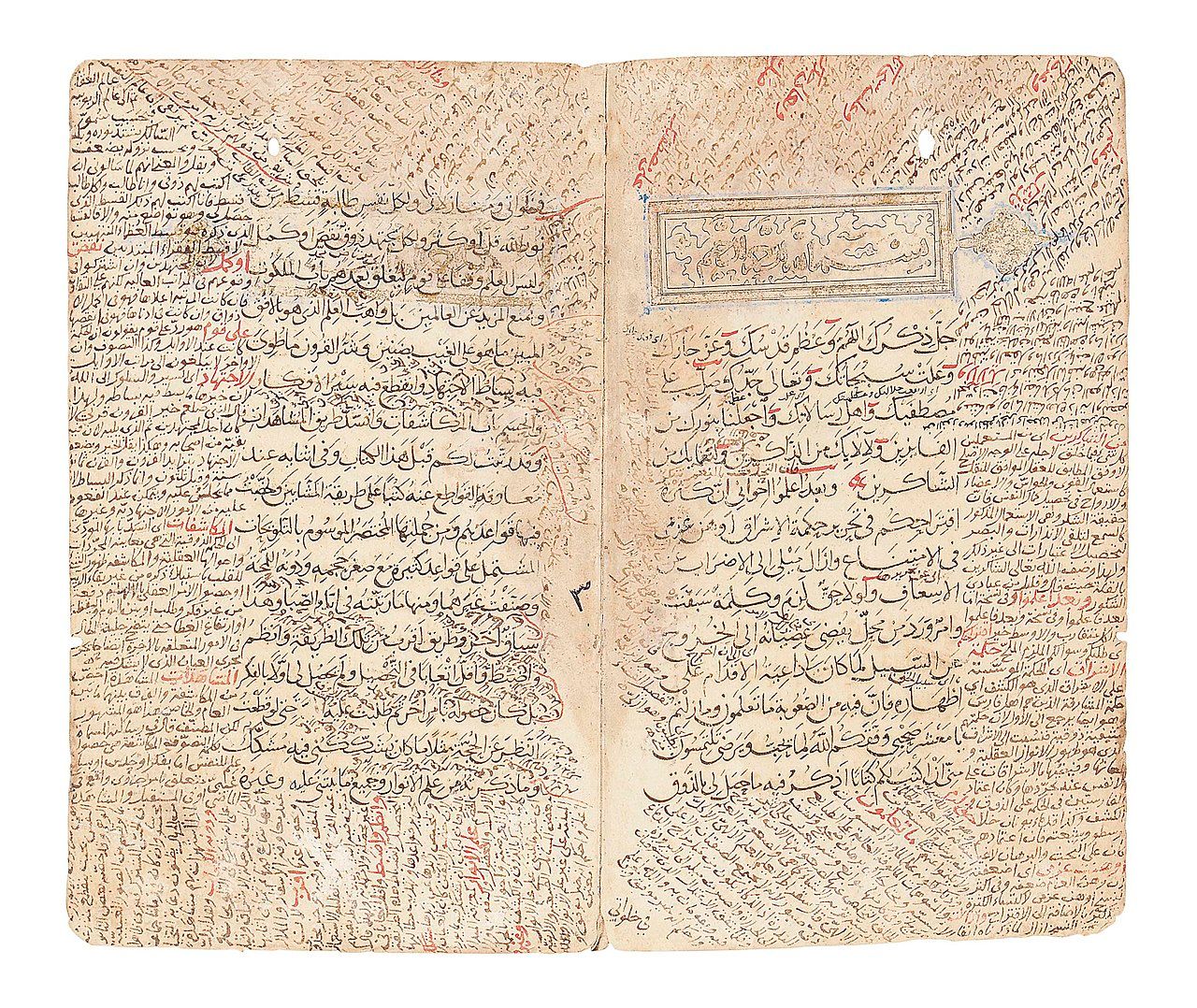
_bin_Amirak_al-Suhrawardi_al-Maqtuli_(d._1191-92);_Hikmat_al-Ishraq,_copied_by_Shams_bin_Jamal_al-Hatani,_post-Seljuq_Iran,_dated_Tuesday_13_October_1220.jpg)
Since there is nothing more evident than light, there is nothing less in need of definition.
Trained in the Avicennan philosophy of his day, Suhrawardi developed a new system that he called the philosophy of illumination (ishraq). In it, reality is a hierarchy of lights, and the deepest knowledge is reached not through definitions and inference but through the direct presence of what is known to the knower.
He was executed in Aleppo in 1191, apparently on the orders of Saladin. His works were never translated into Latin, so he remained unknown in the West, but his school was studied continuously in the Islamic East and shaped later thinkers such as Mulla Sadra.
Key ideas
- Knowledge by presence
- Suhrawardi rejected Avicenna’s view that we know things through a representation or form of them in the mind. The most basic knowledge, starting with the soul’s awareness of itself, is immediate “presence”.
- A philosophy of light
- Light and its manifestation are the basic principles of reality. Everything shares in light to a greater or lesser degree, and the continuous radiance of the “Light of Lights” creates and sustains the unity of all that exists.
- Existence is a concept of the mind
- Against Avicenna, Suhrawardi held that concepts such as existence and “thingness” are “merely mental considerations with no corresponding reality”. What distinguishes things is the intensity of their light.
- The world of images
- Suhrawardi added a fourth level of reality to the traditional scheme, a “world of images” in which imagination plays a new role in the soul’s life after death.
- Tradition
- Arabic and Islamic
- Region
- Persia, Anatolia and Syria
- Schools
- Illuminationism
- Period
- Classical Islamic
- Themes
- Knowledge and scepticism
Influences
Influenced by
Suhrawardi1154–1191
Influenced
Influenced by
Suhrawardi1154–1191
Influenced
Key works
- The Philosophy of Illumination (Hikmat al-ishraq), 1186
Sources
- Roxanne Marcotte, Suhrawardi, Stanford Encyclopedia of Philosophy