Philosopher
Avicenna
c. 970 – 1037 CE
Also known as Ibn Sina, Abu Ali al-Husayn ibn Abd Allah ibn Sina
Philosopher and physician who built a comprehensive system from Aristotelian and Neoplatonic ideas, known for the distinction between essence and existence.
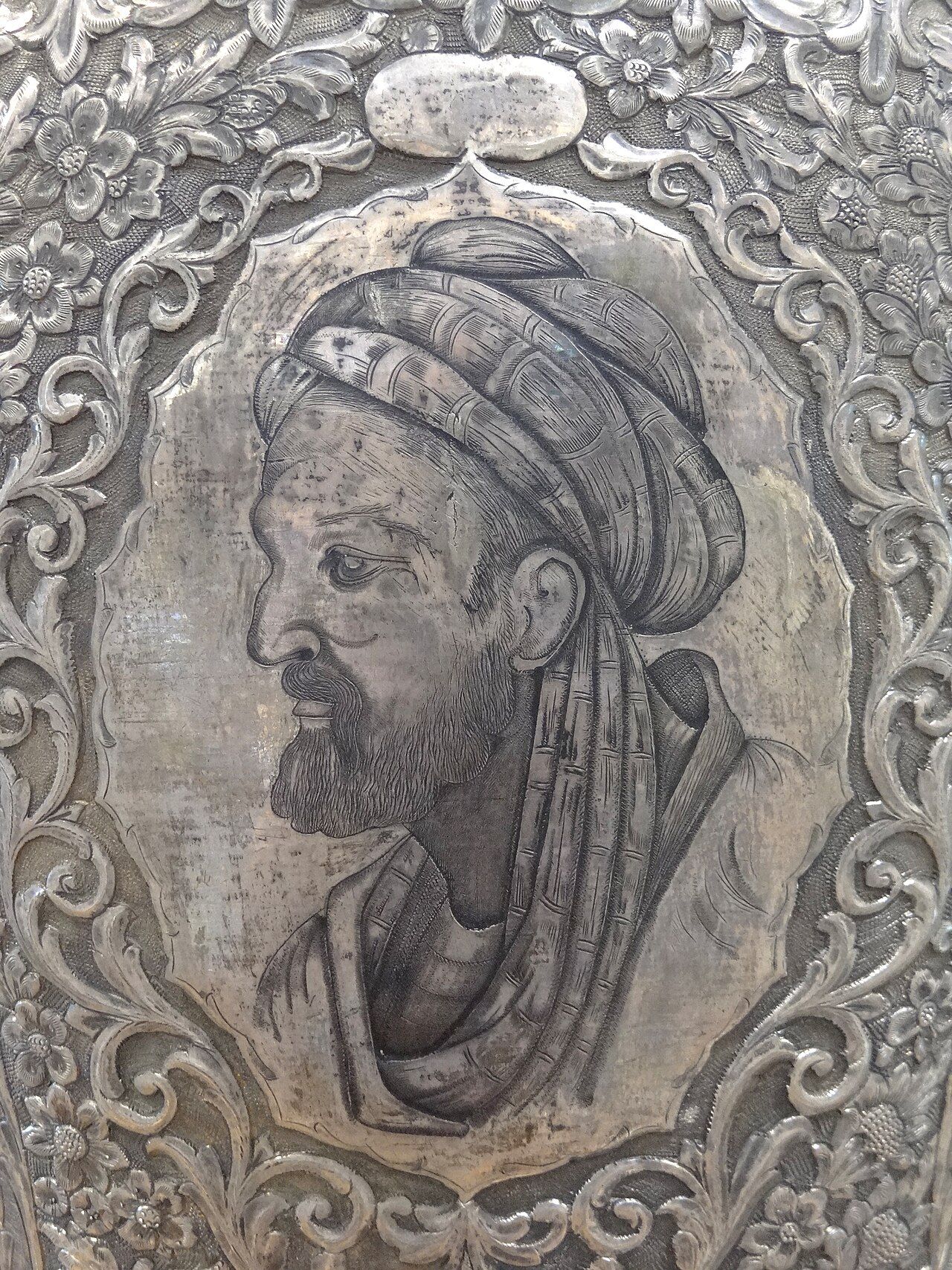
_Mausoleum_-_Hamadan_-_Western_Iran_(7423560860).jpg)
Ibn Sīnā, known in Latin as Avicenna, was the most influential philosopher of the Islamic world. He distinguished what a thing is (its essence) from the fact that it exists, and argued that everything whose existence is not part of its essence depends on a Necessary Existent — God. His thought experiment of the “floating man”, who is aware of himself without any sensation, anticipates Descartes.
His medical encyclopaedia, the Canon, was a standard textbook in Europe for centuries.
- Tradition
- Arabic and Islamic
- Region
- Persia and Central Asia
- Period
- Classical Islamic
- Influenced
- Thomas Aquinas
Key works
- The Book of Healing (Kitab al-Shifa')
- The Canon of Medicine (Al-Qanun fi al-tibb)
Sources
- Dimitri Gutas, Ibn Sina [Avicenna], Stanford Encyclopedia of Philosophy