Philosopher
al-Farabi
c. 870 – c. 950 CE
Also known as Abu Nasr al-Farabi, Alpharabius
Called the 'Second Teacher' after Aristotle, he established the Arabic tradition of Aristotelian logic and wrote on the ideal, virtuous city.
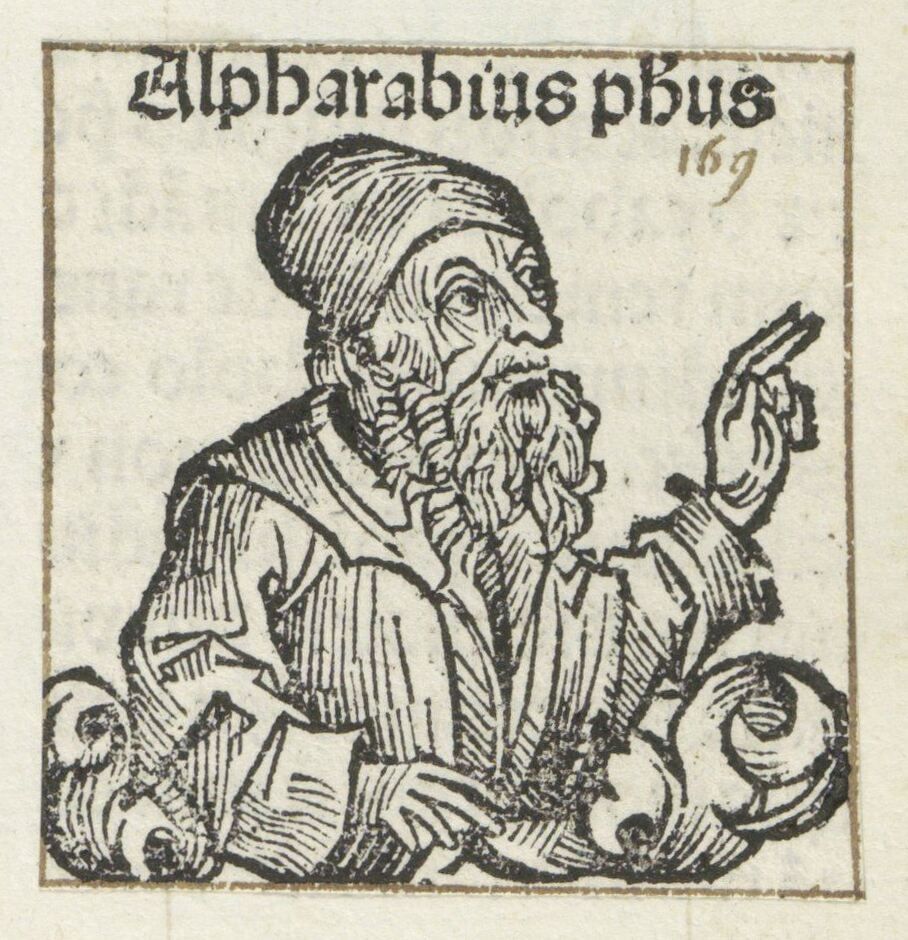
_Liber_Chronicarum_(serietitel),_RP-P-2016-49-86-16.jpg)
Al-Fārābī worked mainly in Baghdad, and later in Damascus, where he died. He wrote extensive commentaries on Aristotle’s logic and was so highly regarded that he became known as the “Second Teacher”, after Aristotle. In his political philosophy he drew on Plato’s Republic to describe a virtuous city led by a philosopher-ruler, and asked how philosophy relates to religion.
- Tradition
- Arabic and Islamic
- Region
- Baghdad and Damascus
- Period
- Classical Islamic
- Influenced
- Avicenna
Key works
- The Virtuous City (Mabadi' ara' ahl al-madina al-fadila)
Sources
- Therese-Anne Druart, al-Farabi, Stanford Encyclopedia of Philosophy