Philosopher
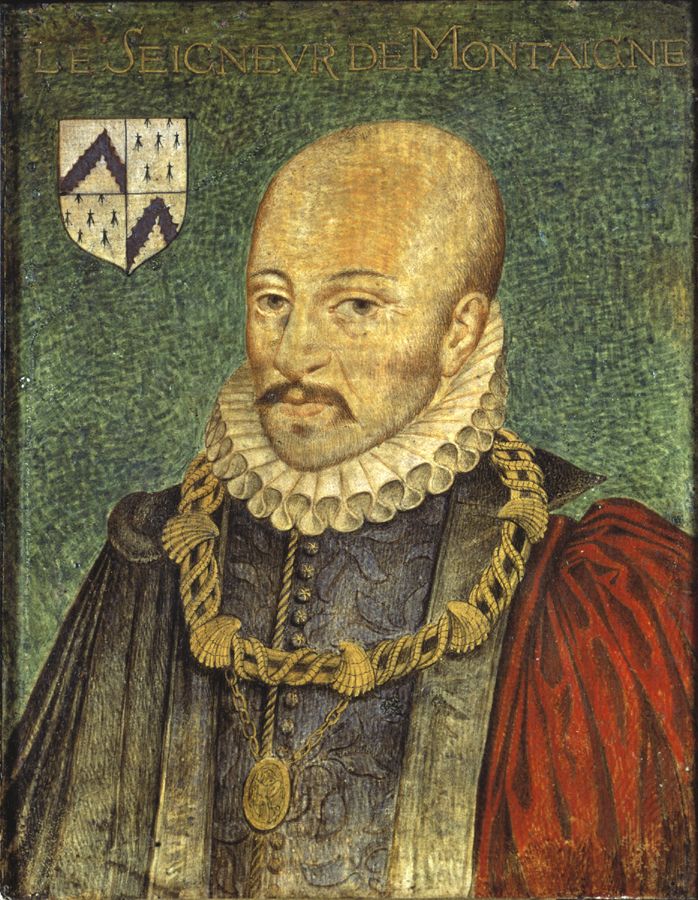
Michel de Montaigne
1533–1592
Also known as Montaigne, Michel Eyquem de Montaigne
French essayist who revived ancient scepticism, took "What do I know?" as his motto, and made the free exercise of one's own judgement the aim of philosophy.

Every one gives the title of barbarism to everything that is not in use in his own country.
Montaigne was born in 1533 into a rich family recently ennobled; his father had him taught Latin as his first language. He held a judicial office and formed an intimate friendship with Étienne de La Boétie, whose death in 1563 left him deeply distraught. In 1571, at 37, he retired to his family’s castle in Périgord to read and write, and later served two terms as Mayor of Bordeaux. The first edition of the Essays appeared in 1580. He died in 1592.
With others, he brought about the rebirth of scepticism in the sixteenth century. His friend Pierre Charron reorganised his ideas, and through him Montaigne influenced the seventeenth century; Pascal admired him as a critic of those who believe they have found unshakeable truths.
Key ideas
- Exercising one’s own judgement
- The aim of the Essays is not to display learning but to exercise one’s own judgement. Montaigne rejected the scholastic habit of justifying inherited beliefs, and asked for free inquiry tied to no doctrine.
- What do I know?
- After reading Sextus Empiricus, Montaigne took the sceptic’s motto “I abstain” and his own “What do I know?” But he transformed Pyrrhonism, weighing opinions against one another to correct a single view rather than to cancel all views.
- The power of custom
- Our beliefs and conduct are shaped by the customs of the place we live, and we call barbarous whatever is not our own custom. Appeals to universal reason or justice in human affairs often hide mere habit.
- The essay
- Montaigne’s Essays are open and unfinished trials of judgement, revised again and again, which invite readers to think further rather than hand them conclusions. Francis Bacon took up the form, and Descartes learned from Montaigne to teach himself and to judge independently.
- Tradition
- Western
- Region
- Périgord and Bordeaux, France
Influences
Influenced by
Michel de Montaigne1533–1592
Influenced
Influenced by
Michel de Montaigne1533–1592
Influenced
Where these links come from
- Michel de Montaigne drew on Lucretius. Source: Marc Foglia and Emiliano Ferrari, Michel de Montaigne, Stanford Encyclopedia of Philosophy
- Michel de Montaigne drew on Sextus Empiricus. Source: Marc Foglia and Emiliano Ferrari, Michel de Montaigne, Stanford Encyclopedia of Philosophy
- Francis Bacon drew on Michel de Montaigne. Source: Marc Foglia and Emiliano Ferrari, Michel de Montaigne, Stanford Encyclopedia of Philosophy
- René Descartes drew on Michel de Montaigne. Source: Marc Foglia and Emiliano Ferrari, Michel de Montaigne, Stanford Encyclopedia of Philosophy
- Blaise Pascal drew on Michel de Montaigne. Source: Desmond Clarke and William Wood, Blaise Pascal, Stanford Encyclopedia of Philosophy
Key works
- Essays (Essais), 1580
- Read free at Project Gutenberg (translated by Charles Cotton)
Sources
- Marc Foglia and Emiliano Ferrari, Michel de Montaigne, Stanford Encyclopedia of Philosophy
- Desmond Clarke and William Wood, Blaise Pascal, Stanford Encyclopedia of Philosophy
- Simon Trépanier, Lucretius, Stanford Encyclopedia of Philosophy