Philosopher
Cicero
106–43 BCE
Also known as Marcus Tullius Cicero, Tully
Roman statesman and orator whose dialogues brought Greek philosophy into Latin, setting rival schools' views side by side in the spirit of Academic scepticism.
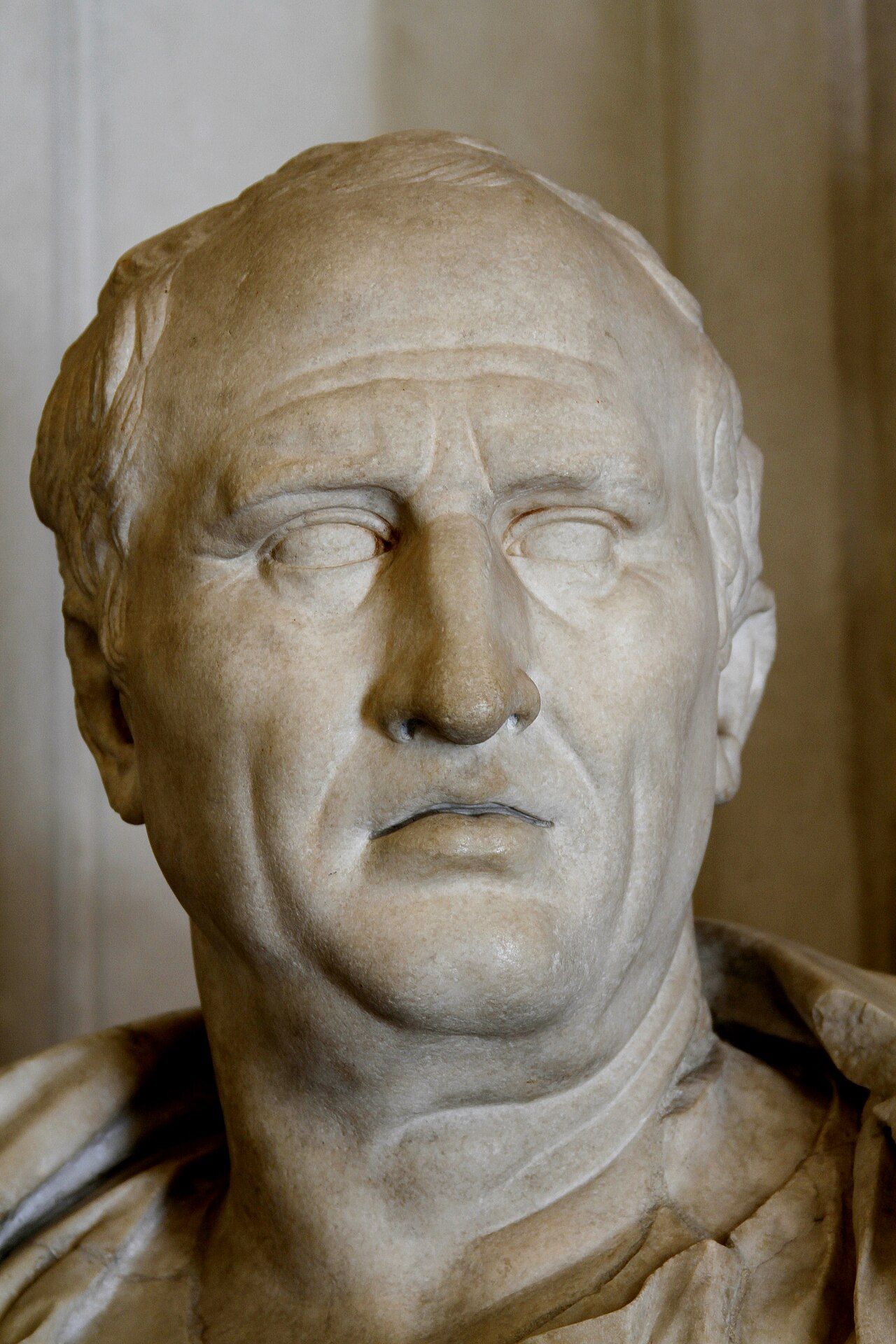
_-_Palazzo_Nuovo_-_Musei_Capitolini_-_Rome_2016.jpg)
The foundation of justice, moreover, is good faith—that is, truth and fidelity to promises and agreements.
It is never expedient to do wrong, because wrong is always immoral; and it is always expedient to be good, because goodness is always moral.
Cicero was one of the leading politicians and orators of the late Roman republic. As consul in 63 BCE he suppressed Catiline’s conspiracy, but his actions led to exile in 58; he returned the next year and watched with dismay as the conflict between Caesar and Pompey became civil war and Caesar made himself dictator. Caesar’s assassination in 44 brought only a brief revival of hope, and in 43 Cicero was killed on the orders of Mark Antony.
Philosophy was a lifelong passion. His first major philosophical works were on politics, and in his last years, after the death of his daughter Tullia and during Caesar’s dictatorship, he set out to cover the whole of philosophy in Latin. Around a dozen philosophical works survive, most of them dialogues, a form he admired in Plato, whom he thought the greatest philosopher. Long valued mainly as a source for the Stoics, Epicureans and sceptics of his day, he is now read as a thinker in his own right. His approach to religion had a well-documented influence on David Hume.
Key ideas
- Arguing every side
- As an Academic sceptic, Cicero held that certainty is out of reach; the most we can do is judge one view more plausible than another, and stay ready to revise that judgement. His dialogues set out each school’s case, then criticise it, leaving readers to decide.
- Natural law
- True law is right reason about what to command and forbid, shared by gods and humans. We are born for justice, so what is right is a matter of nature, not opinion, and a state’s actual laws are to be judged against that standard.
- Theory tested by life
- Philosophy should change lives and improve societies. In On Ends he weighs the Epicurean, Stoic and Old Academic accounts of the highest good, asking not only whether each is coherent but whether people could actually live by it.
- Philosophy for Rome
- His Republic and Laws start from Rome’s real institutions rather than an ideal city, and argue that a good person should take part in public life, against the Epicurean advice to stay out of politics.
- Tradition
- Western
- Region
- Rome
- Period
- Ancient Greek and Roman
Influences
Influenced by
Cicero106–43 BCE
Influenced
Influenced by
Cicero106–43 BCE
Influenced
Where these links come from
- Cicero drew on Plato. Source: Raphael Woolf, Cicero, Stanford Encyclopedia of Philosophy
- Cicero drew on Aristotle. Source: Raphael Woolf, Cicero, Stanford Encyclopedia of Philosophy
- Desiderius Erasmus drew on Cicero. Source: Erika Rummel and Eric MacPhail, Desiderius Erasmus, Stanford Encyclopedia of Philosophy
- David Hume drew on Cicero. Source: Raphael Woolf, Cicero, Stanford Encyclopedia of Philosophy
Key works
- On Duties (De officiis)
- Read free at Project Gutenberg (translated by Walter Miller)
- On the Nature of the Gods (De natura deorum)
- Read free at Project Gutenberg (translated by C. D. Yonge, with the Tusculan Disputations and On the Commonwealth)
- On Ends (De finibus bonorum et malorum)
- Read free at Project Gutenberg (translated by C. D. Yonge, with the Academic Questions and the Tusculan Disputations)
- The Republic (De re publica)
- Read free at Project Gutenberg (translated by George William Featherstonhaugh)
- On Friendship and On Old Age (De amicitia, De senectute)
- Read free at Project Gutenberg (translated by Evelyn S. Shuckburgh)
Sources
- Raphael Woolf, Cicero, Stanford Encyclopedia of Philosophy