Philosopher
Zhang Zai
1020–1077
Also known as Chang Tsai, Zhang Hengqu
Northern Song pioneer of Neo-Confucianism who held that everything is qi, condensing and dispersing, and taught that we form one body with all things.
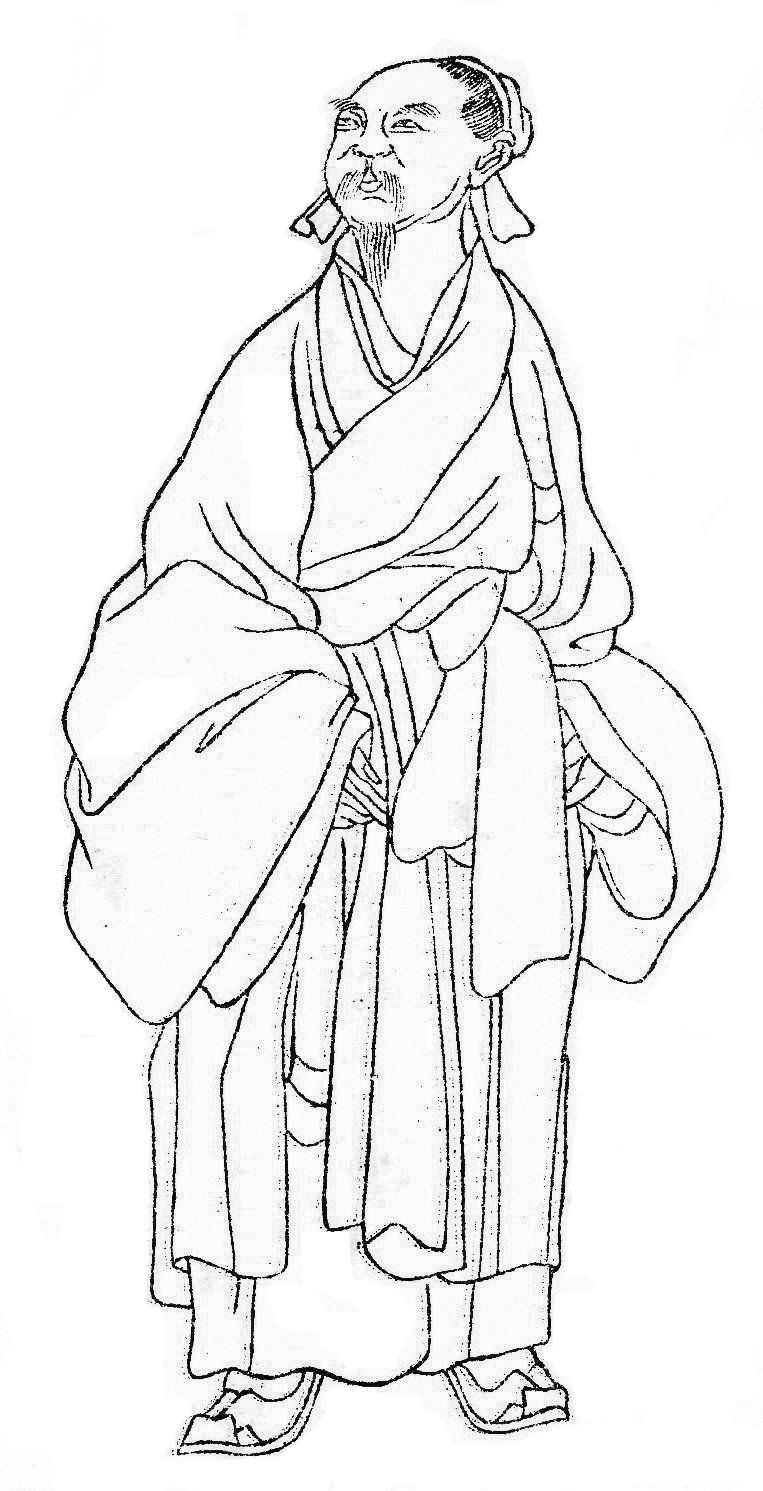

That which fills the universe I regard as my body.
Zhang Zai, called Zhang Hengqu after the town where he was raised and later taught, helped found the Song dynasty “Study of the Way”, known in English as Neo-Confucianism. Like many of his contemporaries he spent years on Buddhism and Daoism, then concluded that the Way lay elsewhere and went back to the Confucian classics, the Classic of Changes above all. He held minor posts, fell out with the prime minister, and did his most productive teaching in retirement at Hengqu, completing Correcting Ignorance in 1076. He died on the road home in 1077.
His theory of qi and his distinction between original and physical nature were taken up by his younger cousins, the Cheng brothers, and by Zhu Xi, who honoured him as a founder of the Study of the Way; Zhu included selections of his writings, many of which are now lost, in the anthology Reflections on Things at Hand. Later thinkers such as Dai Zhen followed him in giving qi priority over pattern (li).
Key ideas
- Everything is qi
- All things, from rocks to people, are condensed qi, and when they pass away their qi disperses into the Great Vacuity, to condense again. Qi is never created or destroyed, like water freezing into ice and melting again.
- Change proves reality
- The Buddhists held that since everything changes, nothing has an essence or is real. Zhang turned this round: change is evidence that things are real. The Great Vacuity is dispersed qi, not emptiness, and nothing is created out of nothing.
- Original nature and physical nature
- Our original nature is good, but it is obscured by the physical nature formed from our particular endowment of qi. Through effort, learning and ritual we can transform our qi and fulfil our original nature, which is how anyone may become a sage.
- One body with all things
- In his “Western Inscription”, Zhang wrote that Heaven and Earth are everyone’s father and mother, so all people are brothers and sisters. The infirm and the orphaned are “my brothers who are in distress”, to be cared for as family.
- Tradition
- Chinese
- Region
- Northern Song China
- Schools
- Confucianism
- Period
- Song–Ming
Influences
Influenced by
Zhang Zai1020–1077
Influenced
Influenced by
Zhang Zai1020–1077
Influenced
Where these links come from
- Zhang Zai drew on Mencius. Source: David Elstein, Zhang Zai (Chang Tsai), Internet Encyclopedia of Philosophy
- Cheng Yi drew on Zhang Zai. Source: Wai-ying Wong, Cheng Yi, Internet Encyclopedia of Philosophy
- Zhu Xi drew on Zhang Zai. Source: Kirill Thompson, Zhu Xi, Stanford Encyclopedia of Philosophy
- Dai Zhen drew on Zhang Zai. Source: Kirill Thompson, Zhu Xi, Stanford Encyclopedia of Philosophy
Key works
- Correcting Ignorance (Zhengmeng), 1076
- Read free at Wikisource (in Classical Chinese)
- Western Inscription (Ximing)
- Read free at Wikisource (in Classical Chinese)
Sources
- David Elstein, Zhang Zai (Chang Tsai), Internet Encyclopedia of Philosophy
- Kirill Thompson, Zhu Xi, Stanford Encyclopedia of Philosophy