Philosopher
Mencius
c. 372 – c. 289 BCE
Also known as Mengzi, Meng Ke
Known as the 'Second Sage' of Confucianism, he argued that human nature is good and that virtue grows from innate moral sprouts.
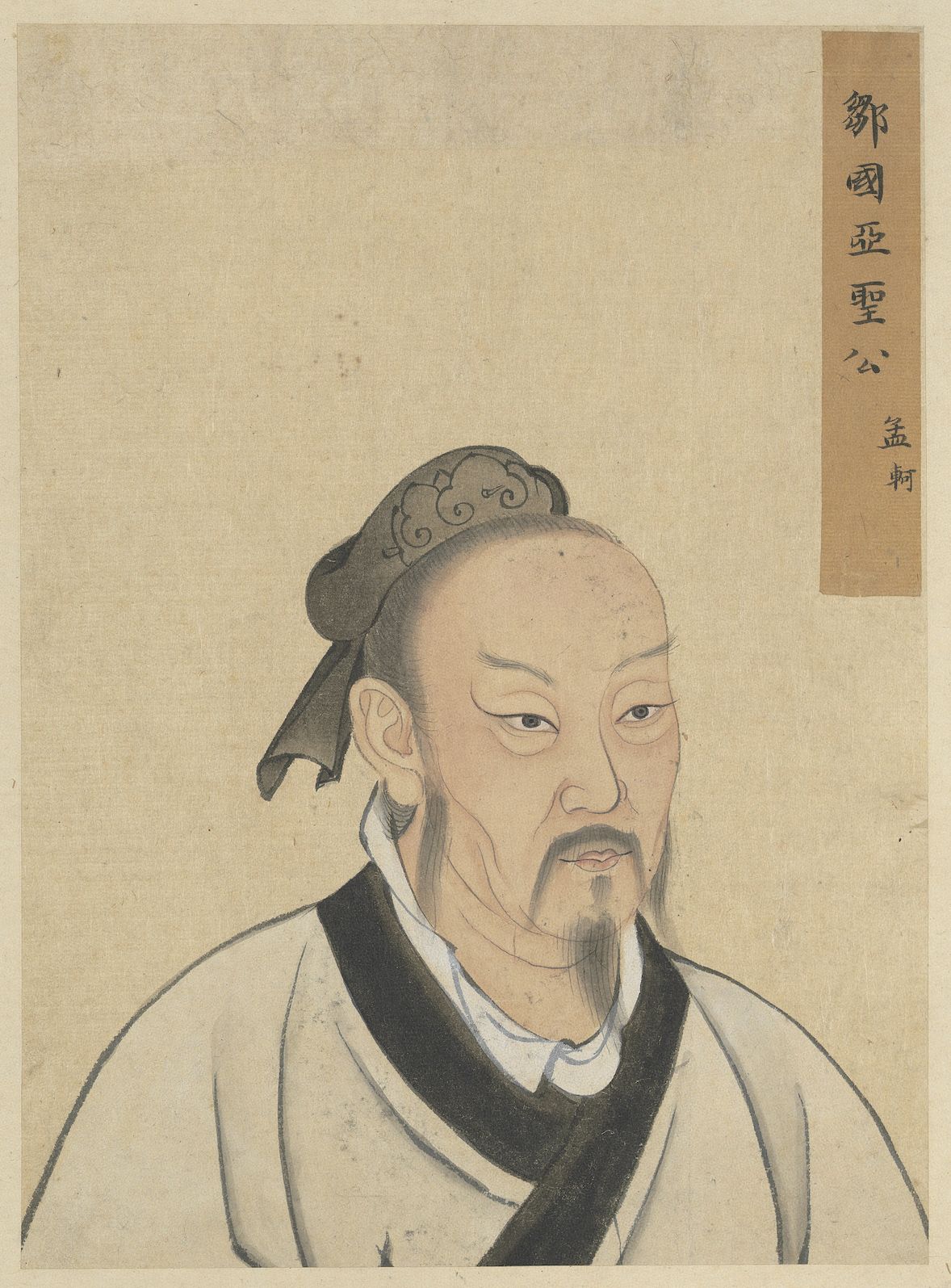
.jpg)
Mencius defended and developed Confucius’s teachings against rival schools. His best-known claim is that human nature is good: everyone has the “sprouts” of benevolence, righteousness, propriety and wisdom, which need cultivating as a farmer tends crops. He also argued that a ruler who oppresses the people forfeits the right to rule.
His dates are traditional; the sources agree only that he lived in the fourth century BCE.
- Tradition
- Chinese
- Region
- State of Zou
- Schools
- Confucianism
- Period
- Classical Chinese
- Influenced by
- Confucius
- Influenced
- Zhu Xi
Key works
- Mencius (Mengzi)
Sources
- Bryan Van Norden, Mencius, Stanford Encyclopedia of Philosophy