Philosopher
William of Ockham
c. 1287 – 1347
Also known as Occam
Franciscan logician and nominalist, remembered for "Ockham's Razor", the principle that we should not assume more entities than we need.
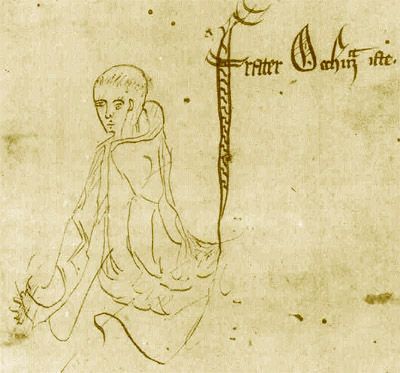

William of Ockham was an English Franciscan who studied and taught at Oxford. Summoned to the papal court at Avignon to answer charges about his teaching, he became caught up in a dispute with Pope John XXII over the poverty of Christ and the apostles, fled in 1328, and spent the rest of his life under the protection of the Emperor Louis IV, mostly in Munich.
He is the leading nominalist of the Middle Ages: he held that only individual things exist, and that universals such as “humanity” are names or concepts that apply to many individuals. The principle of economy that bears his name, not to multiply entities beyond necessity, sums up his approach, though he never used that exact phrase.
- Tradition
- Western
- Region
- England and Munich
- Schools
- Scholasticism
- Period
- Medieval
- Influenced by
- Aristotle
Key works
- Summa of Logic (Summa Logicae), c. 1323
Sources
- Paul Vincent Spade, Claude Panaccio and Jenny Pelletier, William of Ockham, Stanford Encyclopedia of Philosophy