Philosopher
Elizabeth Anscombe
1919–2001
Also known as G. E. M. Anscombe, Gertrude Elizabeth Margaret Anscombe
Wittgenstein's student and translator, whose Intention founded modern action theory and whose 'Modern Moral Philosophy' urged philosophers to abandon the moral 'ought'.
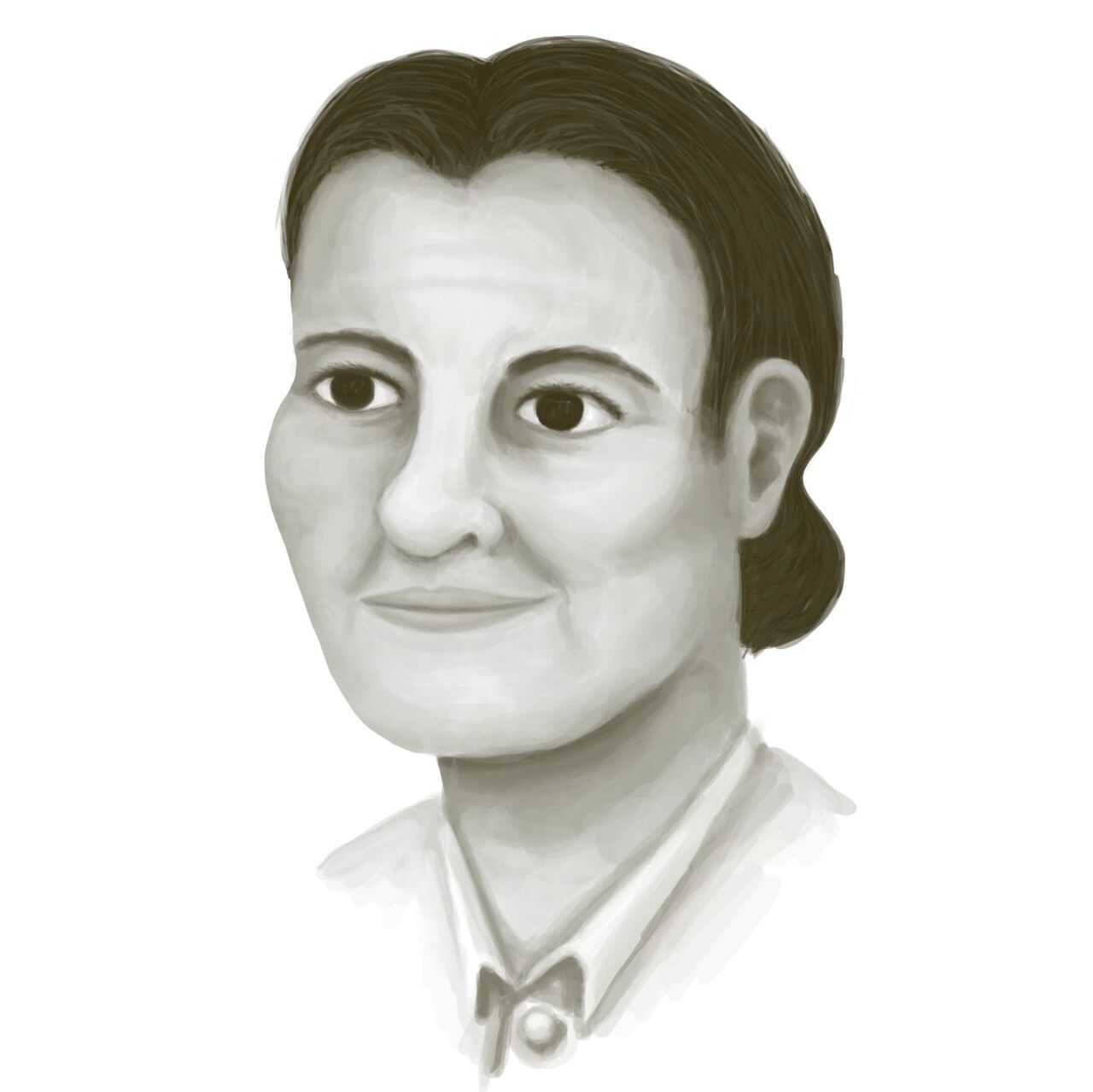

Choosing to kill the innocent as a means to your ends is always murder.
Anscombe was born in Limerick in 1919 and grew up in England, converting to Roman Catholicism in her early teens. At St Hugh’s College, Oxford, she met Iris Murdoch, Mary Midgley and Philippa Foot, who became a lifelong friend. In 1942 she moved to Cambridge, where Wittgenstein’s lectures freed her from the phenomenalism that had troubled her; she became one of his closest friends and, when he died in 1951, the main translator of his writings into English. She married the philosopher Peter Geach, and they had seven children.
She taught at Somerville College, Oxford, from 1946, and in 1970 took the Cambridge chair of philosophy that Wittgenstein had held, retiring in 1986. She was fiercely independent in life as in thought: she attacked C. S. Lewis’s argument against naturalism, after which he significantly rewrote that chapter of Miracles, protested against Truman’s honorary degree, wore men’s clothes and smoked cigars. She died in Cambridge in 2001.
Key ideas
- Abandon the moral “ought”
- In “Modern Moral Philosophy” Anscombe argued that moral philosophy is pointless until we have a sound philosophy of psychology, and that moral obligation and the moral “ought” are relics of ways of thinking about ethics that no longer survive. It inspired modern virtue ethics, which she did not advocate.
- Consequentialism
- Anscombe coined the word “consequentialism” for the view, shared by English moral philosophers from Sidgwick on, that we are as responsible for the foreseen results of our actions as for the intended ones. On that view, killing one innocent person to save five might be the right thing to do.
- Intending and foreseeing
- Deliberately killing innocent people as a means to an end is always murder. On these grounds Anscombe opposed Oxford’s honorary degree for Harry Truman after Hiroshima and Nagasaki. Doing something one knows will cause a death as a side effect is not always murder.
- Intention
- Her book Intention studies agency through the concept of intention. We know our own intentional actions in a distinctive, first-personal way, which she called “practical knowledge”, and which can be understood only through practical reasoning.
- Causes without necessity
- Against the Humean orthodoxy, Anscombe argued that causality consists in an effect’s being derived from its causes, not in necessitation. One event can cause another without determining it.
- Tradition
- Western
- Region
- England
- Period
- Contemporary
Influences
Influenced by
Elizabeth Anscombe1919–2001
Influenced by
Elizabeth Anscombe1919–2001
Where these links come from
- Elizabeth Anscombe argued against David Hume. Source: Eric Wiland and Julia Driver, Gertrude Elizabeth Margaret Anscombe, Stanford Encyclopedia of Philosophy
- Elizabeth Anscombe drew on Gottlob Frege. Source: Eric Wiland and Julia Driver, Gertrude Elizabeth Margaret Anscombe, Stanford Encyclopedia of Philosophy
- Elizabeth Anscombe studied with and drew on Ludwig Wittgenstein. Source: Eric Wiland and Julia Driver, Gertrude Elizabeth Margaret Anscombe, Stanford Encyclopedia of Philosophy
Key works
- Intention
- Modern Moral Philosophy
- Mr Truman's Degree, 1958
- Causality and Determination
- War and Murder, 1972
Sources
- Eric Wiland and Julia Driver, Gertrude Elizabeth Margaret Anscombe, Stanford Encyclopedia of Philosophy