Philosopher
Boethius
c. 476 – c. 526 CE
Also known as Anicius Manlius Severinus Boethius
Roman statesman who handed Aristotle's logic to the Latin Middle Ages, and wrote The Consolation of Philosophy in prison while awaiting execution.
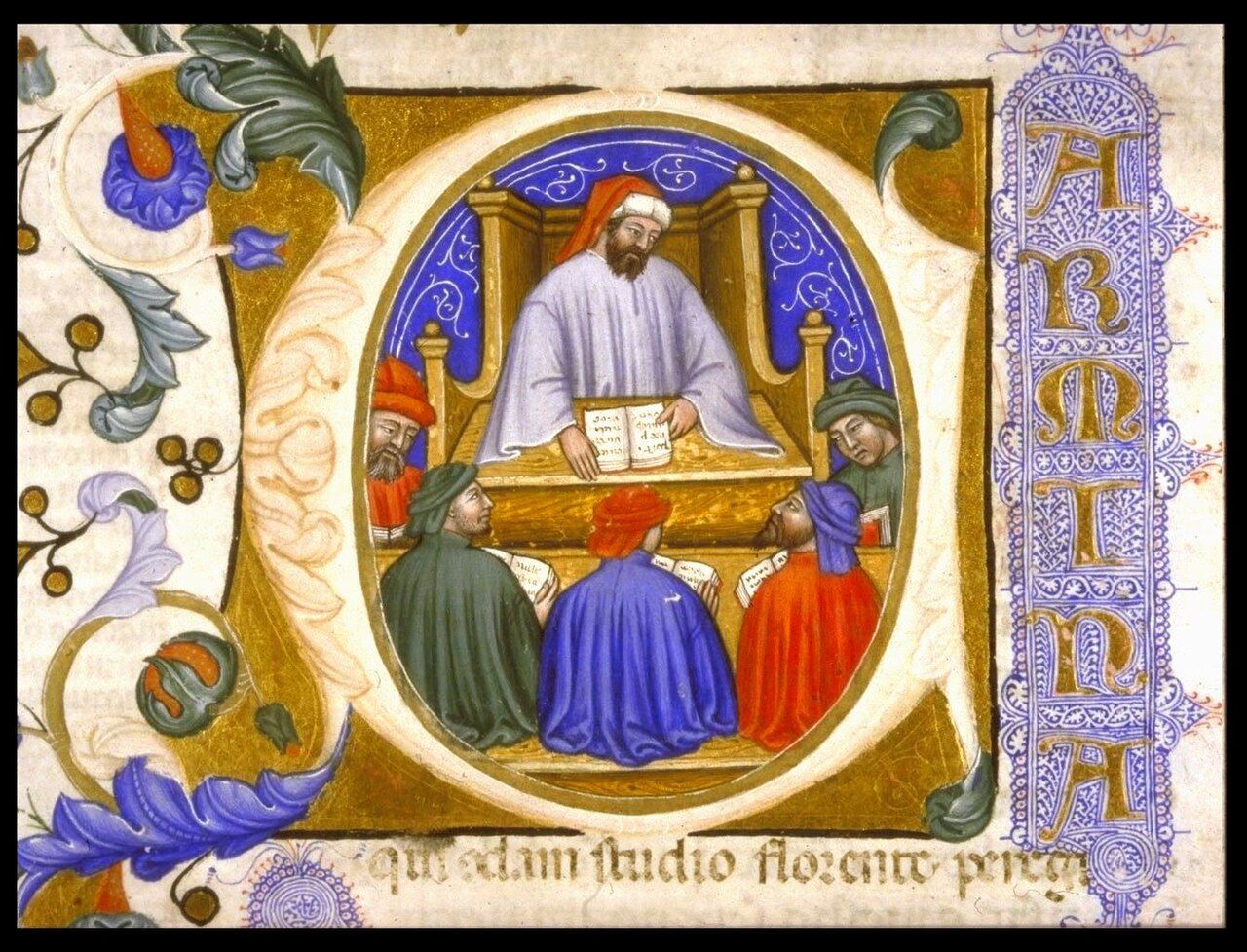

Nothing is wretched, but thinking makes it so, and conversely every lot is happy if borne with equanimity.
Boethius was born into the Roman aristocracy in about 475–7, around the time the last western Roman emperor was deposed, and lived most of his life under the Ostrogothic king Theoderic. Taught Greek thoroughly, he spent most of his life in learned leisure, planning to translate and comment on all of Plato and Aristotle. He rose to be Theoderic’s Master of Offices, among the highest posts in the government, but made enemies at court, was accused of treason and magic, and was executed, probably in 526.
In prison he wrote The Consolation of Philosophy, a dialogue in prose and verse between himself and Lady Philosophy. With Augustine and Aristotle, he became one of the fundamental philosophical authors of the Latin Middle Ages, and his translations and commentaries remained the standard route to Aristotle’s logic until the twelfth century.
Key ideas
- True happiness is not fortune’s gift
- Riches, status, power and pleasure are goods of fortune of very limited value. True happiness rests on virtue, wisdom and sufficiency, and ultimately on the highest good itself, so losing fortune’s gifts need not cut us off from it.
- Foreknowledge and free will
- If God infallibly foresees every choice, it seems no choice can be free. Philosophy answers that God, being eternal, knows all things as we know what is present. What he knows is necessary only conditionally, which places no constraint on our freedom.
- A bridge for logic
- Boethius translated Aristotle’s logical works into Latin, commented on them, and wrote textbooks on the syllogism and on topical argument. His translations remained standard throughout the Middle Ages.
- Logic in theology
- In his theological treatises Boethius used logical analysis to tackle Christian doctrines such as the Trinity, setting a pattern for medieval philosophical theology.
- Tradition
- Western
- Region
- Rome and Ravenna, Ostrogothic Italy
- Period
- Ancient Greek and Roman
Influences
Influenced by
Boethiusc. 476 – c. 526 CE
Influenced
Influenced by
Boethiusc. 476 – c. 526 CE
Influenced
Where these links come from
- Boethius drew on Aristotle. Source: John Marenbon, Anicius Manlius Severinus Boethius, Stanford Encyclopedia of Philosophy
- Boethius drew on Proclus. Source: Christoph Helmig and Carlos Steel, Proclus, Stanford Encyclopedia of Philosophy
- John Scottus Eriugena drew on Boethius. Source: Dermot Moran and Adrian Guiu, John Scottus Eriugena, Stanford Encyclopedia of Philosophy
- Peter Abelard drew on and argued against Boethius. Source: Peter King and Andrew Arlig, Peter Abelard, Stanford Encyclopedia of Philosophy
- Thomas Aquinas drew on Boethius. Source: Robert Pasnau, Thomas Aquinas, Stanford Encyclopedia of Philosophy
Key works
- The Consolation of Philosophy (De consolatione philosophiae)
- Read free at Project Gutenberg (translated by H. R. James)
- Theological Treatises (Opuscula sacra)
Sources
- John Marenbon, Anicius Manlius Severinus Boethius, Stanford Encyclopedia of Philosophy
- Christoph Helmig and Carlos Steel, Proclus, Stanford Encyclopedia of Philosophy