Philosopher
Parmenides
fl. 500–450 BCE
Also known as Parmenides of Elea
Author of a metaphysical poem arguing that what is cannot come to be or pass away, so that change and plurality are illusions of the senses.
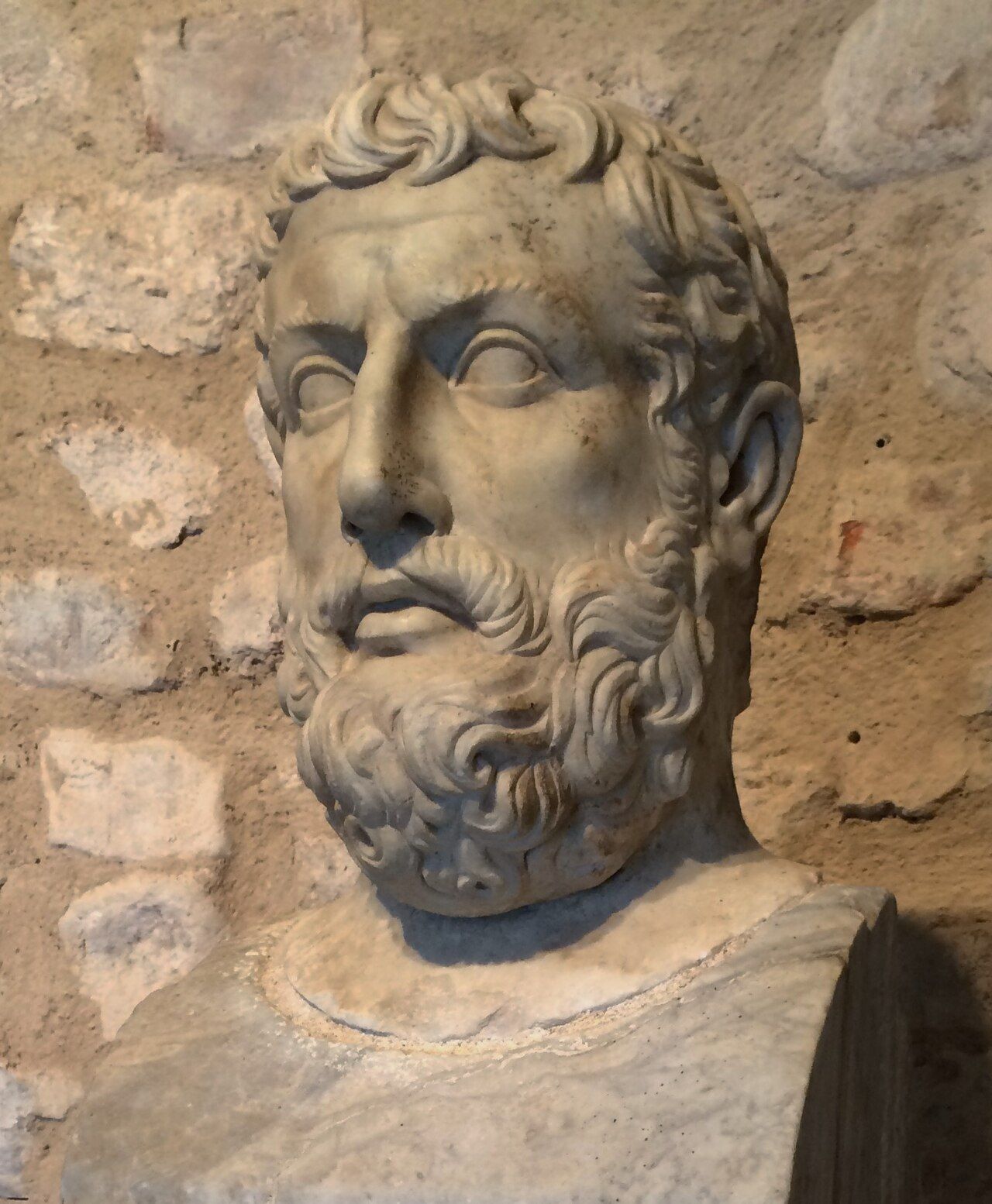
.jpg)
Parmenides set out his philosophy in a poem, of which substantial fragments survive, in which a goddess reveals to a young man the “way of truth”. Starting from the claim that what is not cannot be thought or spoken of, he argued that what is must be ungenerated, imperishable, whole and unchanging. The changing world we perceive belongs to the “way of opinion”.
How exactly to read the poem is still debated, but its arguments set the agenda for the philosophers who followed, who tried to explain change and plurality without falling foul of them. Plato named a dialogue after him. His dates are approximate: he was active in the early fifth century BCE.
- Tradition
- Western
- Region
- Elea, southern Italy
- Period
- Ancient Greek and Roman
- Influenced
- Plato
Key works
- On Nature
Sources
- John Palmer, Parmenides, Stanford Encyclopedia of Philosophy