Philosopher
Nishitani Keiji
1900–1990
Also known as Keiji Nishitani
Kyoto School philosopher of religion, inspired by Nishida, who held that nihilism can be overcome only by passing through it to the 'field of emptiness'.
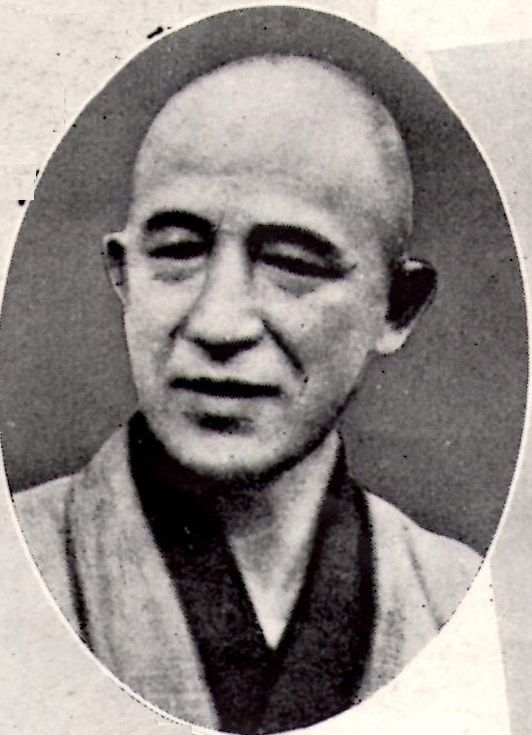

Our tradition must be appropriated from the direction in which we are heading, as a new possibility.
Inspired by Nishida Kitarō, Nishitani Keiji became, with Nishida and Tanabe Hajime, one of the three most prominent members of the Kyoto School. He came to Western thought through Bergson, Schelling, Nietzsche and the German mystics, and from 1937 to 1939 studied with Heidegger, who, in turn, often invited him home to learn about Zen. The problem of nihilism became the focus of his work.
During the war he took part in controversial symposia on “overcoming modernity” and on Japan’s place in world history, and after it he was purged from his university post for several years. As he later told a student, “During the war we were struck on the cheek from the right; after the war we were struck on the cheek from the left.” In the postwar decades he found his own voice as a philosopher of religion, bringing Zen Buddhist thought into conversation with medieval Christian mystics, existentialism and phenomenology, and addressing nihilism, which he took to be the defining problem of the modern age.
Key ideas
- Three fields
- Nishitani describes three standpoints. On the “field of being and consciousness” the ego sets itself against things it treats as objects to manipulate; on the “field of nihility” both self and things are cast into doubt; on the “field of emptiness” they are affirmed again without dualism.
- Overcoming nihilism by passing through it
- Modern people swing between reifying the ego and a nihilism that empties self and world of reality, and humanism and science cannot end the swing. Heeding Nietzsche’s madman, we must stop fleeing nihilism and go through it, breaking through relative nothingness to absolute nothingness.
- The field of emptiness
- Emptiness is not a void that threatens things from outside but an open clearing in which things are neither annihilated nor reduced to objects: they are left to arise and pass away, freely related to one another. It is also where a genuine encounter between persons can happen.
- Tradition from the future
- Japan cannot turn back to a pre-modern past; modernity can be overcome only by passing through it. Tradition should be taken up creatively, in the light of where we are going, rather than used as a refuge.
- Tradition
- Japanese
- Region
- Kyoto
- Schools
- Kyoto School
- Period
- Modern Japanese
- Themes
- What is ultimately real
Influences
Influenced by
- Friedrich Nietzsche1844–1900criticised
- Nishida Kitarō1870–1945
- Martin Heidegger1889–1976teacher, criticised
Nishitani Keiji1900–1990
Influenced by
- Friedrich Nietzsche1844–1900criticised
- Nishida Kitarō1870–1945
- Martin Heidegger1889–1976teacher, criticised
Nishitani Keiji1900–1990
Where these links come from
- Nishitani Keiji drew on and argued against Friedrich Nietzsche. Source: Bret W. Davis, The Kyoto School, Stanford Encyclopedia of Philosophy
- Nishitani Keiji drew on Nishida Kitarō. Source: Bret W. Davis, The Kyoto School, Stanford Encyclopedia of Philosophy
- Nishitani Keiji studied with, drew on and argued against Martin Heidegger. Source: Bret W. Davis, The Kyoto School, Stanford Encyclopedia of Philosophy
Key works
- Religion and Nothingness
- The Self-Overcoming of Nihilism
Sources
- Bret W. Davis, The Kyoto School, Stanford Encyclopedia of Philosophy