Philosopher
Heraclitus
fl. 510–490 BCE
Also known as Heraclitus of Ephesus
Ephesian thinker who held that everything is in flux, that opposites form a unity, and that change is governed by a rational principle, the logos.
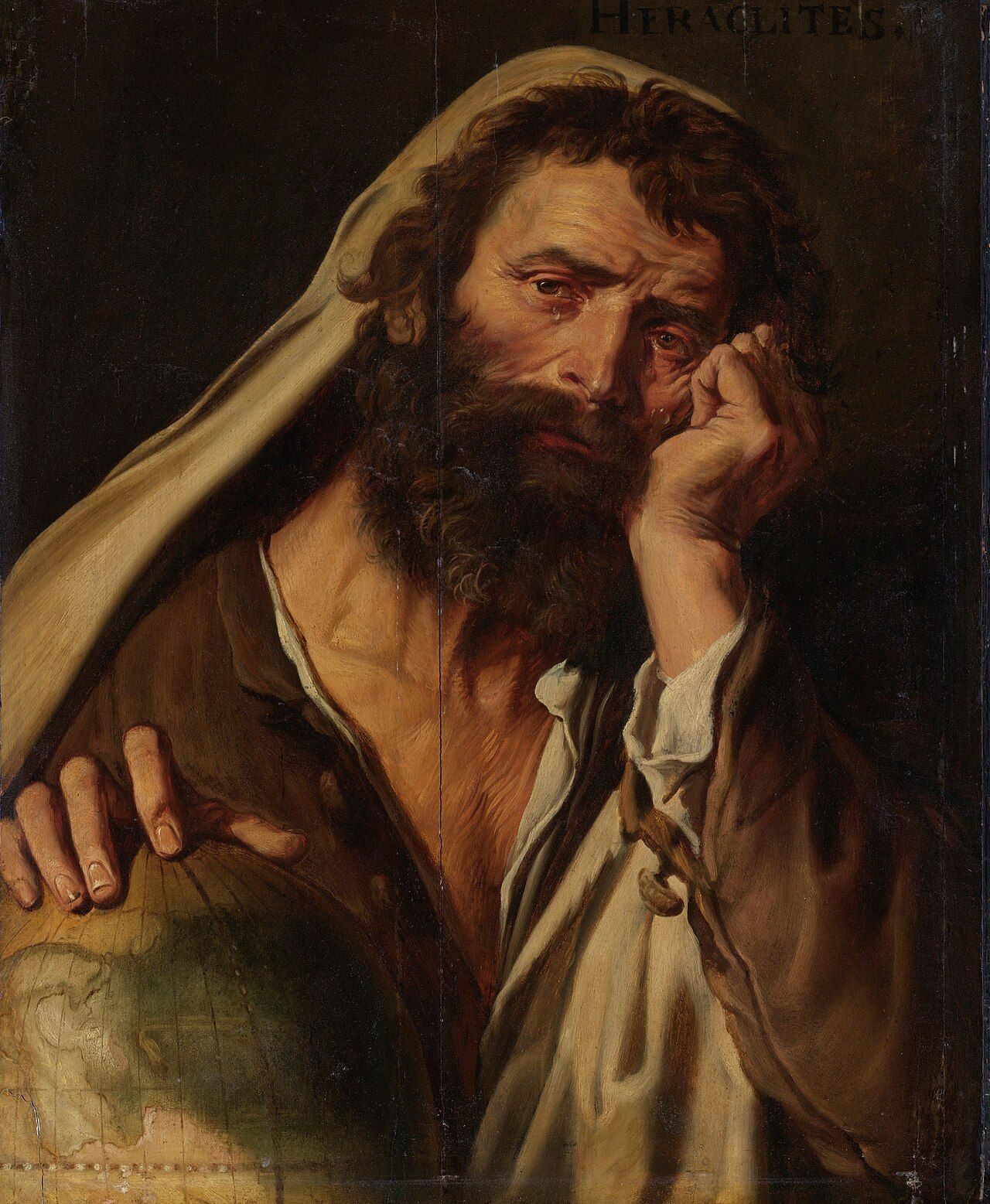

Heraclitus wrote in short, riddling sayings, of which only fragments survive, quoted by later authors. He is best known for the idea that things are constantly changing, later summed up in the saying that you cannot step into the same river twice, and for the claim that opposites such as day and night, or war and peace, belong together as a unity. He took fire to be the basic stuff of the world, and spoke of a logos, an underlying account or law, that governs all change.
Ancient readers found him deliberately difficult and nicknamed him “the Obscure”. His dates are approximate: he was active around 500 BCE.
- Tradition
- Western
- Region
- Ephesus, Ionia
- Period
- Ancient Greek and Roman
- Influenced
- Plato
Sources
- Daniel W. Graham, Heraclitus, Stanford Encyclopedia of Philosophy