Philosopher
Han Fei
fl. 260 – d. 233 BCE
Also known as Han Feizi
Leading thinker of the Legalist, or fa, tradition, who argued that order depends not on virtue but on clear laws, reliable rewards and punishments, and the power of the ruler’s position.
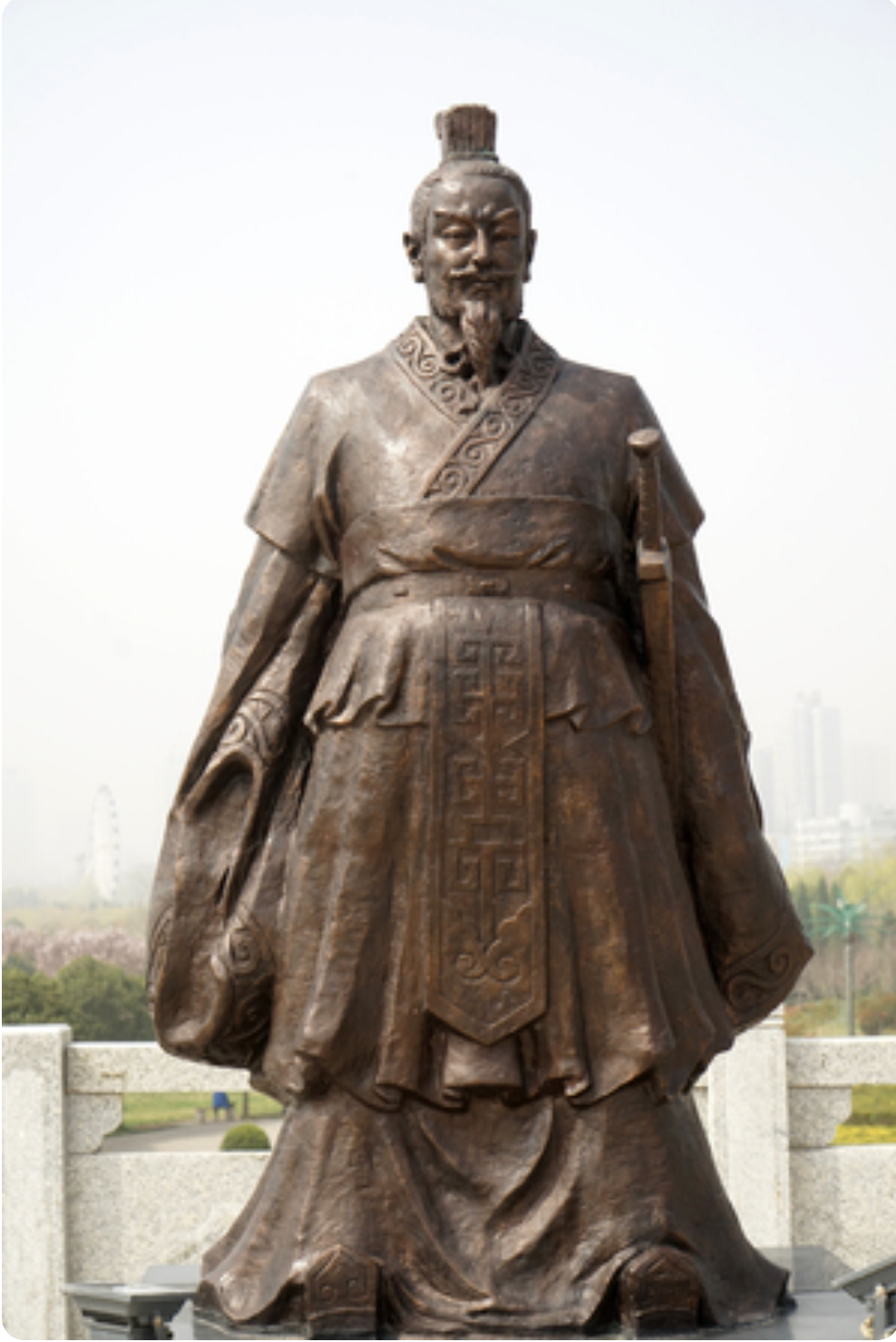

Han Fei was a member of the ruling family of the state of Han. The book that bears his name, the Han Feizi, is the most influential text of the tradition later called Legalism, which he presented himself as synthesising. He is a tragic figure: he is said to have been killed in the custody of the king of Qin, whom he had hoped to serve, in 233 BCE.
The Legalists were political realists. Since people will always be selfish and covet wealth and fame, they argued, a state cannot rely on its rulers or subjects behaving morally. It needs impartially applied standards (fa), dependable rewards and punishments, and a ruler whose authority rests on the power of his position rather than his personal qualities.
Key ideas
- Rule by standards (fa)
- Impersonal laws and regulations are more reliable than the personal abilities or virtue of whoever holds office. “Nothing is as good as fa.” Laws must apply equally to all and be understood by everyone.
- Self-interest, not virtue
- Han Fei assumed that officials will do whatever they can to serve their own interests. A well-designed system doesn’t rely on their morality, but on rewards and punishments.
- Techniques of rule (shu)
- “The sage orders the officials, not the people.” The ruler must match officials’ performance to their titles, keep sole control of rewards and punishments, and guard against ministers scheming to take his power.
- The past is no guide
- We can’t verify what the ancient sage kings actually did, so anyone who claims to know is “either a fool or an impostor”. Changed circumstances may call for reshaping the whole political system.
- Tradition
- Chinese
- Region
- State of Han
- Schools
- Legalism
- Period
- Classical Chinese
- Themes
- How to govern
Influences
Influenced by
Han Feifl. 260 – d. 233 BCE
Influenced by
Han Feifl. 260 – d. 233 BCE
Key works
- Han Feizi
- Read free at Project Gutenberg (in Classical Chinese)
Sources
- Yuri Pines, Legalism in Chinese Philosophy, Stanford Encyclopedia of Philosophy
- Paul R. Goldin, Xunzi, Stanford Encyclopedia of Philosophy
- Chris Fraser, Mohism, Stanford Encyclopedia of Philosophy
- Alan Chan, Laozi, Stanford Encyclopedia of Philosophy