Philosopher
Augustine
354–430 CE
Also known as Augustine of Hippo, Aurelius Augustinus
Bishop of Hippo whose writings on sin, grace, free will and time made him the most influential Christian thinker of late antiquity and the Latin Middle Ages.
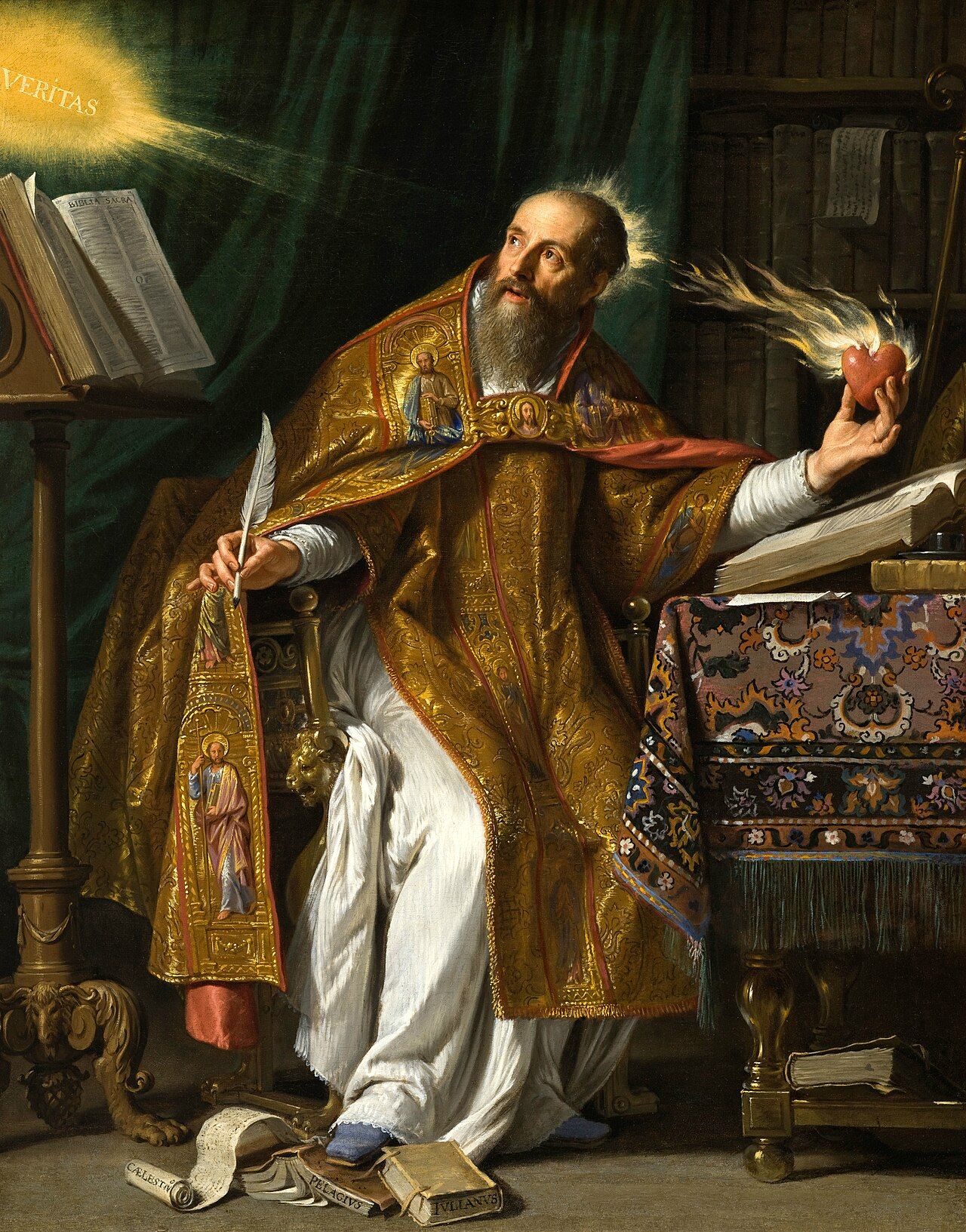

Born in Thagaste in Roman North Africa, Augustine taught rhetoric in Carthage, Rome and Milan before converting to Christianity in 386; he later became bishop of Hippo. His Confessions tells the story of his restless search for truth, and includes a famous reflection on the nature of time.
Reading Platonist philosophers, above all Plotinus, helped him think of God and the soul as immaterial. He wrote extensively on free will, evil, grace and the relation between faith and reason, and in The City of God he contrasted the “earthly city” with the “city of God”. His authority in the Latin West went almost unchallenged for a thousand years.
- Tradition
- Western
- Region
- North Africa and Italy
- Period
- Ancient Greek and Roman
- Influenced
- Thomas Aquinas
Key works
- Confessions (Confessiones), c. 400 CE
- The City of God (De civitate Dei), 426 CE
Sources
- Christian Tornau, Augustine of Hippo, Stanford Encyclopedia of Philosophy