Philosopher
Thomas Kuhn
1922–1996
Also known as Thomas Samuel Kuhn
Physicist turned historian and philosopher of science whose Structure of Scientific Revolutions argued that science advances through paradigm shifts, not steady accumulation.
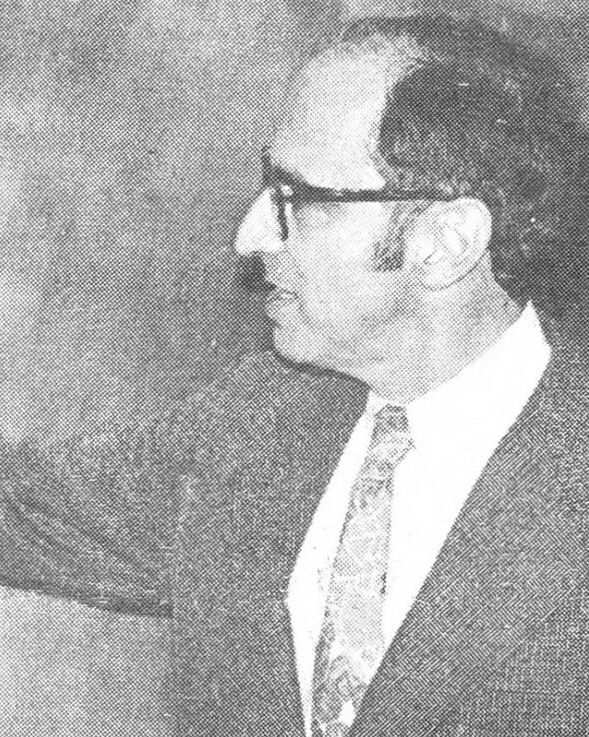
.jpg)
History, if viewed as a repository for more than anecdote or chronology, could produce a decisive transformation in the image of science by which we are now possessed.
Kuhn trained as a physicist at Harvard, taking his doctorate in 1949. Teaching a general science course built on historical case studies, he was bewildered by Aristotle’s physics until he suddenly saw how to read it without the distortions of later science, and he turned to the history of science. He moved to Berkeley in 1956, where Stanley Cavell introduced him to Wittgenstein and he discussed his work with Paul Feyerabend.
Few academic books have been cited more often than The Structure of Scientific Revolutions (1962). Philosophers first received it with hostility, as seeming to make science irrational, and a 1965 colloquium in London set his views against Popper’s. He later taught at Princeton and MIT, and died in 1996, perhaps the most influential philosopher of science of the twentieth century.
Key ideas
- Normal science and revolutions
- Mature science alternates between long periods of “normal science”, solving puzzles within an accepted framework, and revolutions. When anomalies the framework cannot solve pile up, a crisis follows, and a rival framework may replace it.
- Paradigms
- A paradigm is an exemplary piece of scientific work, such as Ptolemy’s computations or Lavoisier’s use of the balance, that sets the puzzles for a community of scientists and supplies the tools to solve them. More broadly it is a whole “disciplinary matrix” of theories, instruments and values.
- Incommensurability
- Science under one paradigm is “incommensurable” with science under another; there is no common measure for comparing them. So later science does not simply build on earlier knowledge or come ever closer to the truth.
- Different worlds
- After a revolution, scientists see the world differently, as in the Gestalt switch between seeing a duck and a rabbit. Kuhn said, in a sense he could not fully explain, that proponents of rival paradigms “practice their trades in different worlds”.
- Evolution without a goal
- Like Darwinian evolution, science develops away from primitive beginnings without moving towards any fixed goal. There can be progress “from” without progress “to”.
- Tradition
- Western
- Region
- United States
- Period
- Contemporary
- Themes
- Knowledge and scepticism
Influences
Where these links come from
- Thomas Kuhn argued against Karl Popper. Source: Alexander Bird, Thomas Kuhn, Stanford Encyclopedia of Philosophy
Key works
- The Copernican Revolution, 1957
- The Structure of Scientific Revolutions, 1962
- The Essential Tension
- Black-Body Theory and the Quantum Discontinuity
Sources
- Alexander Bird, Thomas Kuhn, Stanford Encyclopedia of Philosophy