Philosopher
Seneca
c. 1 BCE – 65 CE
Also known as Lucius Annaeus Seneca, Seneca the Younger
Roman Stoic, statesman and adviser to Nero, whose letters and essays made Stoic ethics a practical guide to living and shaped how later readers saw Stoicism.
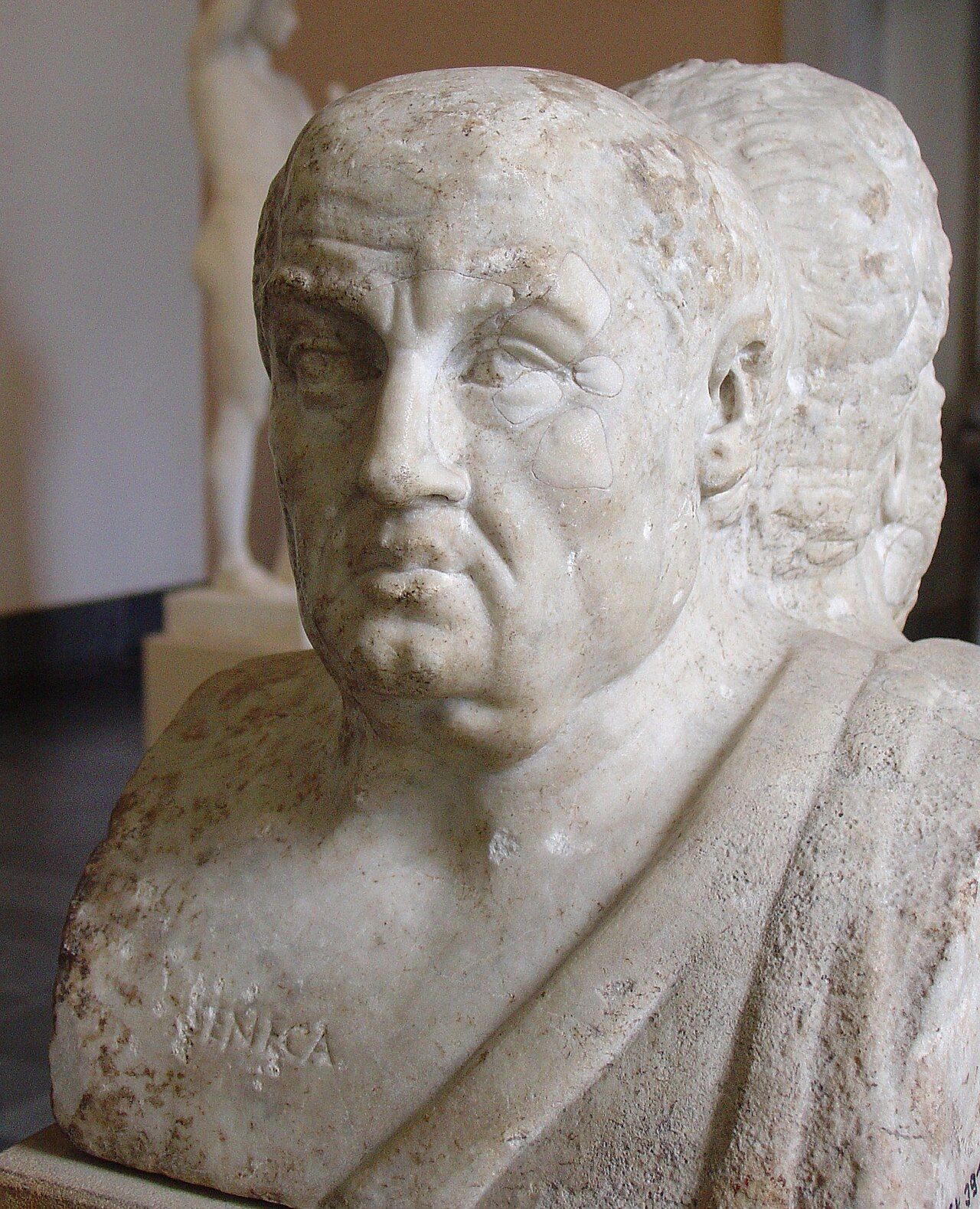

We do not receive a short life, but we make it a short one, and we are not poor in days, but wasteful of them.
Seneca was born around 1 BCE at Corduba in Spain and studied rhetoric and philosophy in Rome. His political career was as dramatic as it was successful: he was exiled to Corsica in 41 on a charge of adultery with the emperor Caligula’s sister, became tutor to the young Nero and then one of his advisers, and in 65 was accused of joining a conspiracy against him and forced to take his own life.
Writing in Latin, Seneca shaped the letter and the consolation as philosophical genres, and his On Mercy is considered the first “mirror for princes”. His works played a large part in the revival of Stoicism in the Renaissance, and many readers still come to Stoic philosophy through him rather than through the fragmentary evidence for the earlier Stoics.
Key ideas
- Philosophy as a practice
- Philosophy is a way of living and healing the soul, not an academic exercise. Seneca writes directly to his readers about their own lives, inviting them to examine their fears, ambitions and use of time.
- Only virtue is good
- Health, wealth and comfort have value but are not goods; virtue is all we need for happiness, and nothing else adds to it at all. Seneca’s vivid everyday examples press home how hard this is to accept.
- Curing anger
- In On Anger Seneca treats anger as a particularly violent emotion. The Stoic ideal is not moderation of the emotions but life without them, replaced by rational feelings, though even the wise feel involuntary first stirrings.
- Benefiting others
- Both public life and philosophy are good if they benefit others, and the virtuous person benefits others even without holding office. On Benefits analyses giving, receiving and returning favours, gratitude and envy.
- Tradition
- Western
- Region
- Rome
- Schools
- Stoicism
- Period
- Ancient Greek and Roman
- Themes
- The good life
Key works
- Moral Letters to Lucilius (Epistulae morales ad Lucilium)
- Moral Essays
- Read free at Project Gutenberg (translated by Aubrey Stewart, as Minor Dialogues, Together With the Dialogue on Clemency)
- On Benefits (De beneficiis)
- Read free at Project Gutenberg (translated by Aubrey Stewart)
- Natural Questions (Naturales quaestiones)
Sources
- Katja Vogt, Seneca, Stanford Encyclopedia of Philosophy