Philosopher
Epicurus
341–270 BCE
Taught that the good life is one of tranquil pleasure, free from fear of the gods and of death, and explained the world as atoms moving in the void.
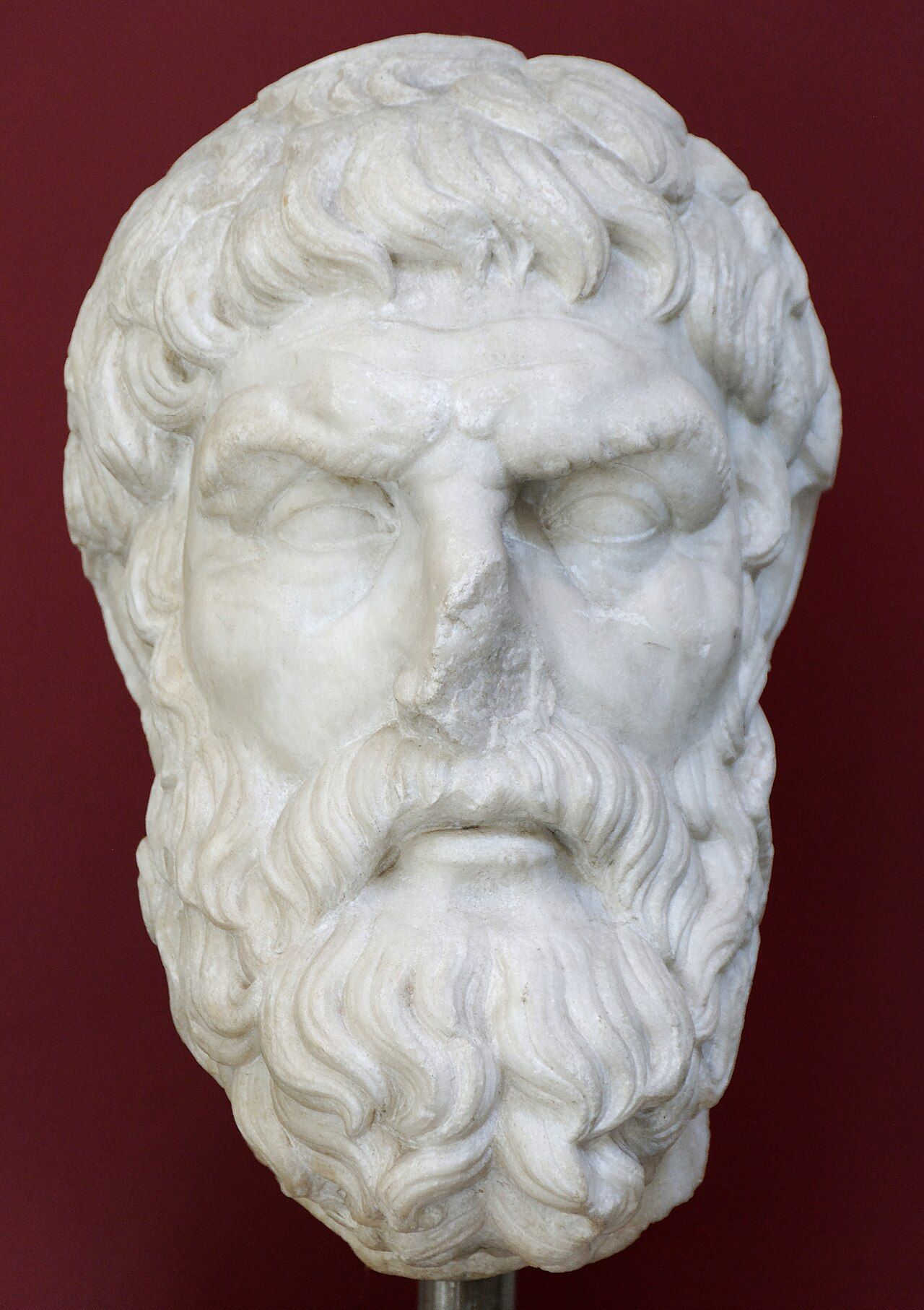

Epicurus founded a school in Athens around 306 BCE, known simply as the Garden. He held that pleasure is the goal of life, but understood the highest pleasure as tranquillity, freedom from bodily pain and mental disturbance, rather than indulgence. Simple living, friendship and philosophical understanding were the means to it.
Building on the atomism of Democritus, he explained the world as atoms moving in empty space, with no role for divine intervention. Since the soul too is made of atoms and disperses at death, he argued that death is nothing to us, and that fearing it is a mistake. Most of his many writings are lost; three letters and a set of maxims survive because Diogenes Laërtius quoted them in full.
- Tradition
- Western
- Region
- Athens
- Schools
- Epicureanism
- Period
- Ancient Greek and Roman
Key works
- Letter to Menoeceus
- Principal Doctrines (Kyriai Doxai)
Sources
- David Konstan, Epicurus, Stanford Encyclopedia of Philosophy